Now as I finally don’t have to weed, there is time to browse the pages of gardening. Let us begin with roses.
 Rosenmeile
: The page of Christine Meile, rose gardener and photographer (as well as a dog fan). Wonderful and rich in information.
Helpmefind: Everything that is rose. They publish several photos of each plant (and eventually links to gardens where the respective rose can be found), give very precise data about their height and width, and often also about their tolerance of shade. They provide detailed information about special sorts like the completely cold hardy Canadian roses which had been developed in the last decades. This is the site I use the most about roses.
 RogersRoses
: The web version of that fabulous English book whose illustrations incited us ten years ago to establish our rose garden and that I have been regularly browsing ever since. The internet version has a very good search function.
EveryRose: One of the largest rose databases with an advanced search function. Its composite searches were a great help to me as a beginner.
 RoseFile
: Another rose database with many good images and information, and with a special page on roses for cold climate.
JustOurPictures: The most beautiful rose photos I have ever seen.
David Austin Roses: In my opinion the most beautiful roses of the world. They look as marvelous as historical roses, but in contrast to them they are remontant. They have fantastic colors, some of them smells wonderfully, and some are extremely sturdy. In my experience, however, we in Central Europe should better import his roses from more nearby regions, Germany or Austria, because they are stronger and develop better at us.
 Peter Beales Roses
: The other world famous British rose nursery alongside with Austin’s. They sell more than 1300 classical roses, and have a quite fantastic offer concerning wild roses and historical roses. The page has a very good advanced search function that also includes the roses’ demand of light and soil, an information otherwise hard to obtain. (Nevertheless, take with caution the periods of blooming reported by them.) Their roses curiously tolerate better the change of climate between Britain and Hungary than those of Austin.
Rosen von Schultheis: The doyen of German rose nurseries with a large offer and good quality. It sells a lot of English roses, and also a number of such specialties like the Canadian and Estonian hybrids which are surely cold hardy at us.


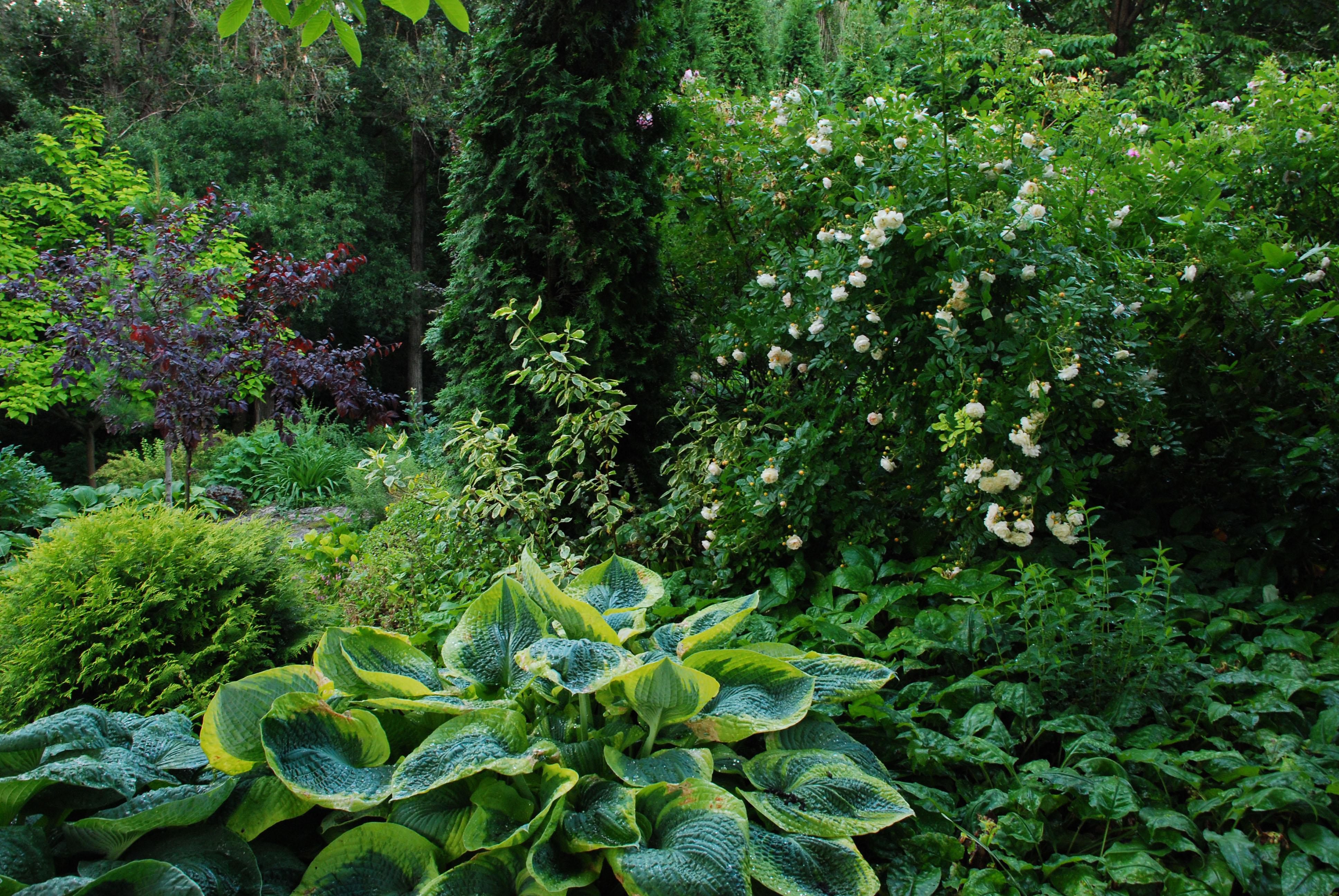
 David Austin has found a perfectly fitting name to this rose, which is the very mirror of the country cottage. A classical pink rose with pleasant smell, and with a nice, loose bush form that stands out even among the roses of Austin. It blooms all over the summer, and it is continuously beautiful. If you have place only for one or two roses, you are advised to choose it.
 type: English rose (David Austin 1991)
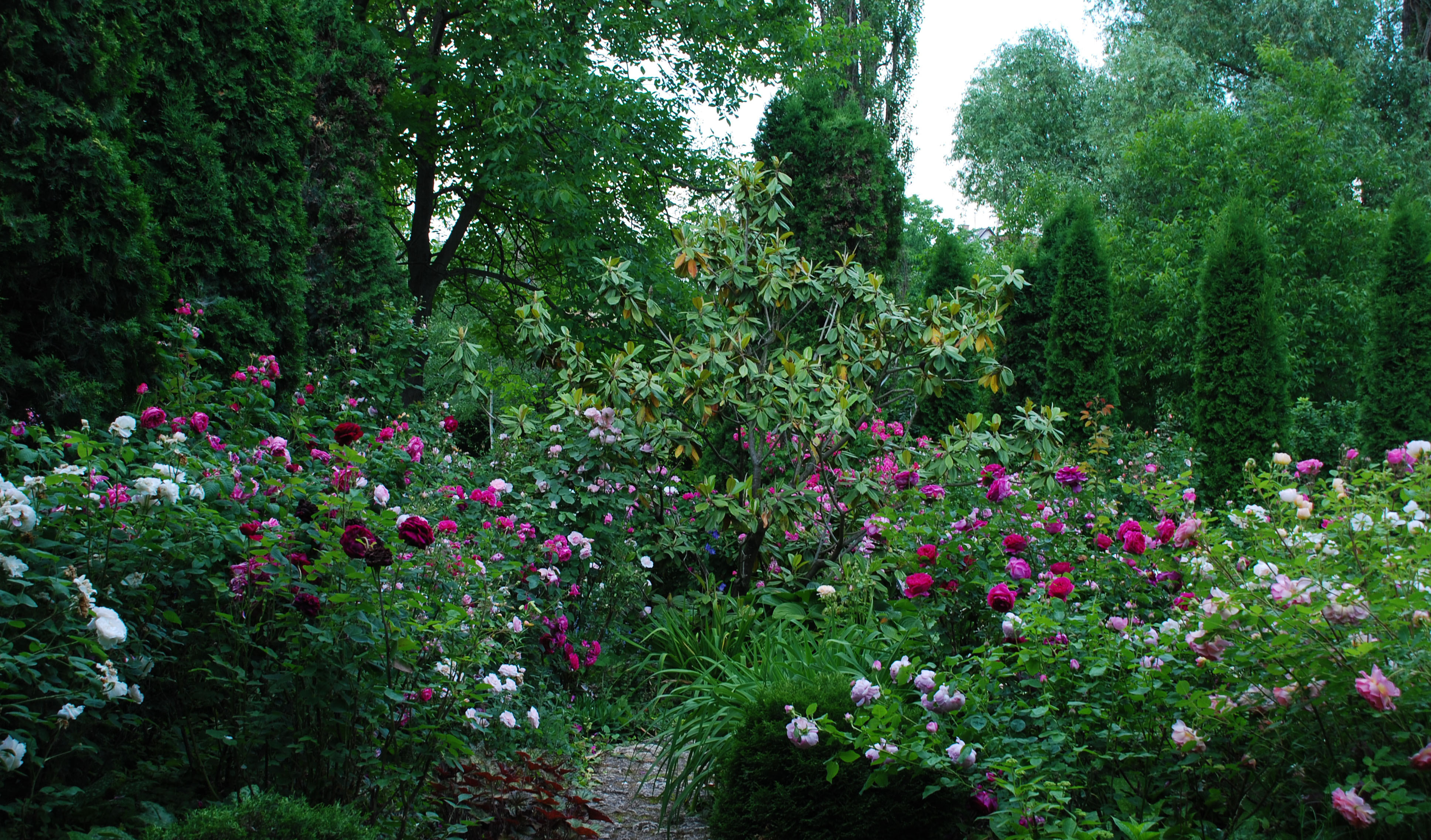
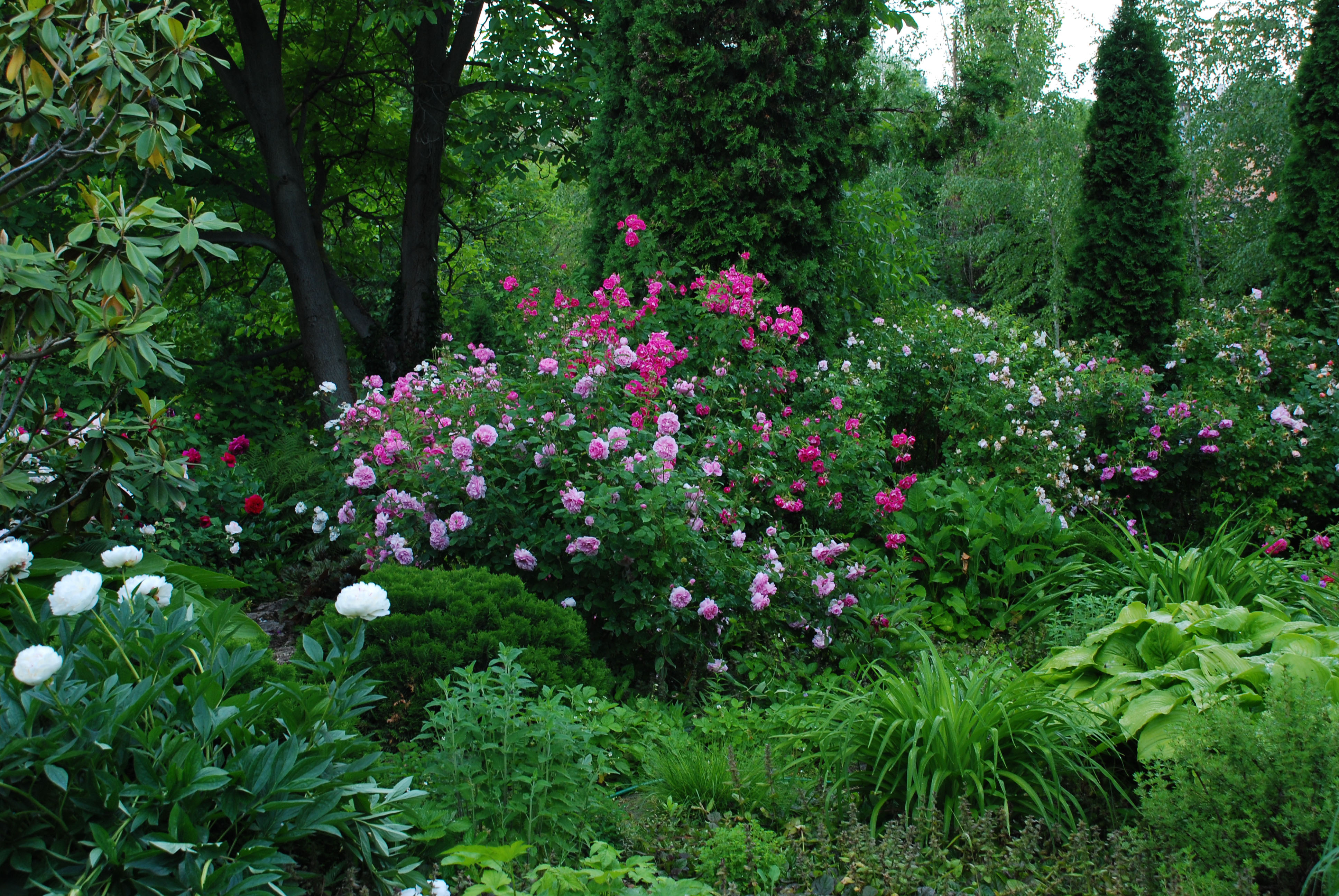
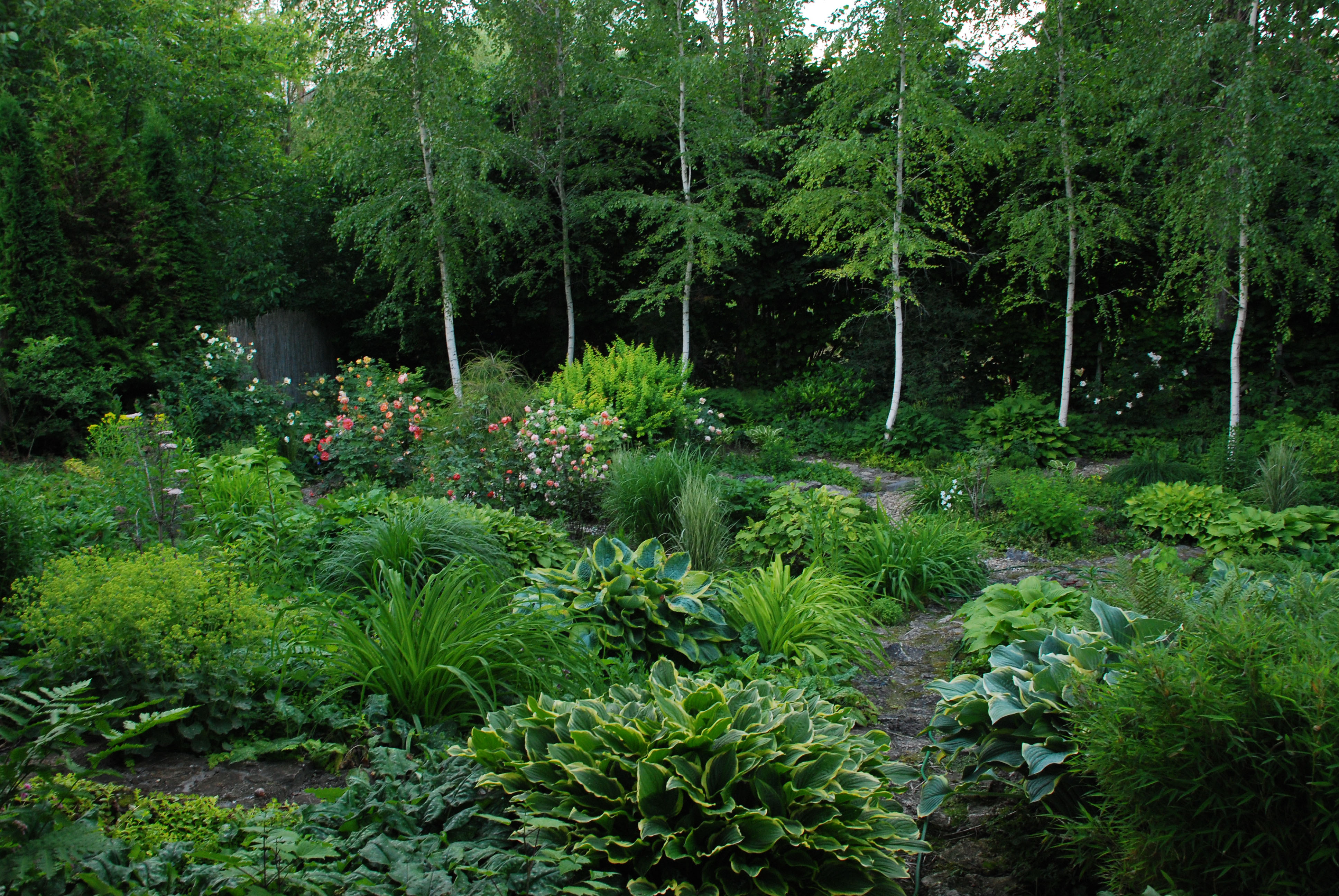
 And this is the period of rose flowering. They started at the beginning of June, and they continue it with various intensity until the frosts.
 Spring and early summer blue, white and pink perennials have already ceased flowering, while the yellow composition will be really spectacular only from the beginning of July.
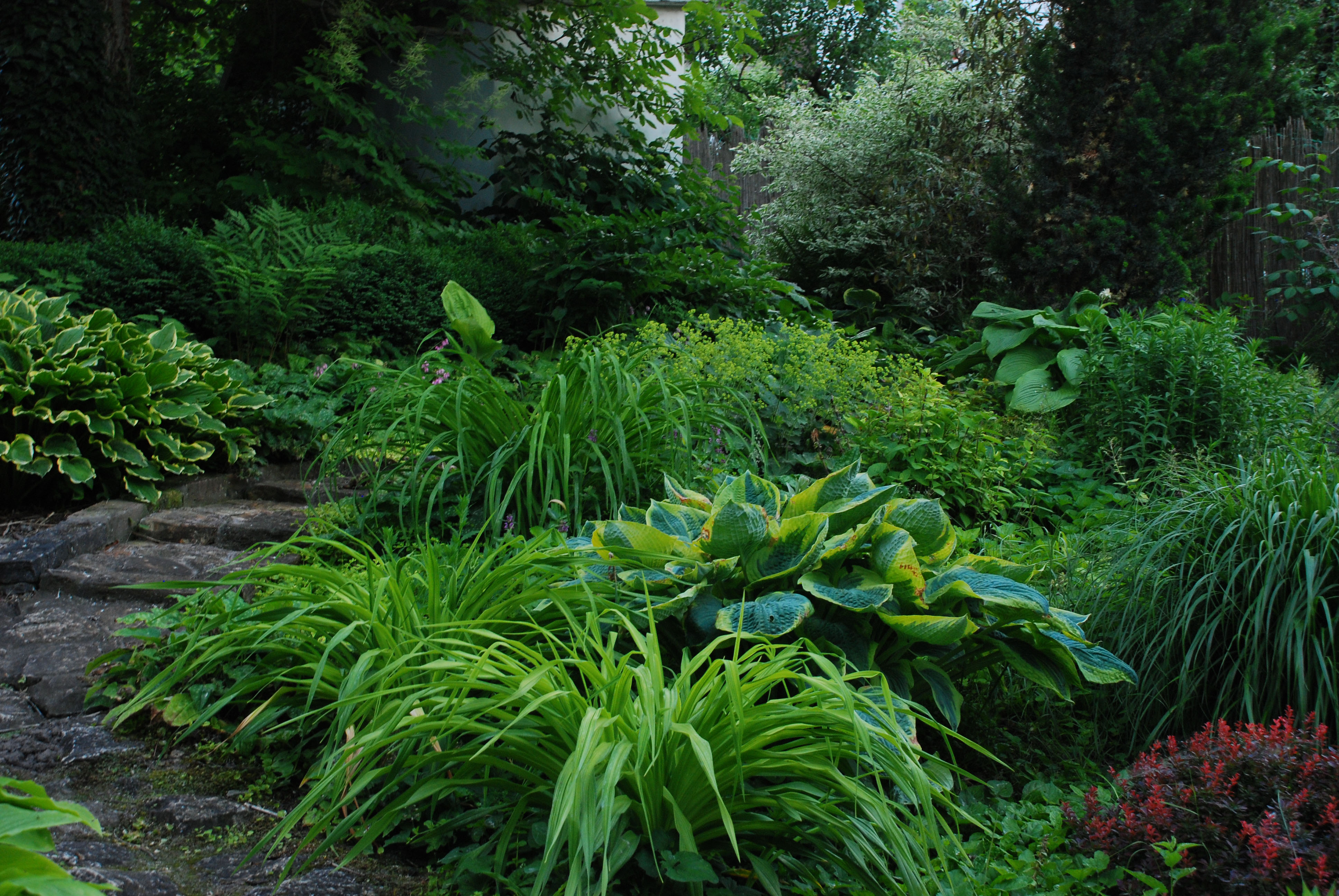
 However, some early ones like this daylily have already opened the yellow season.
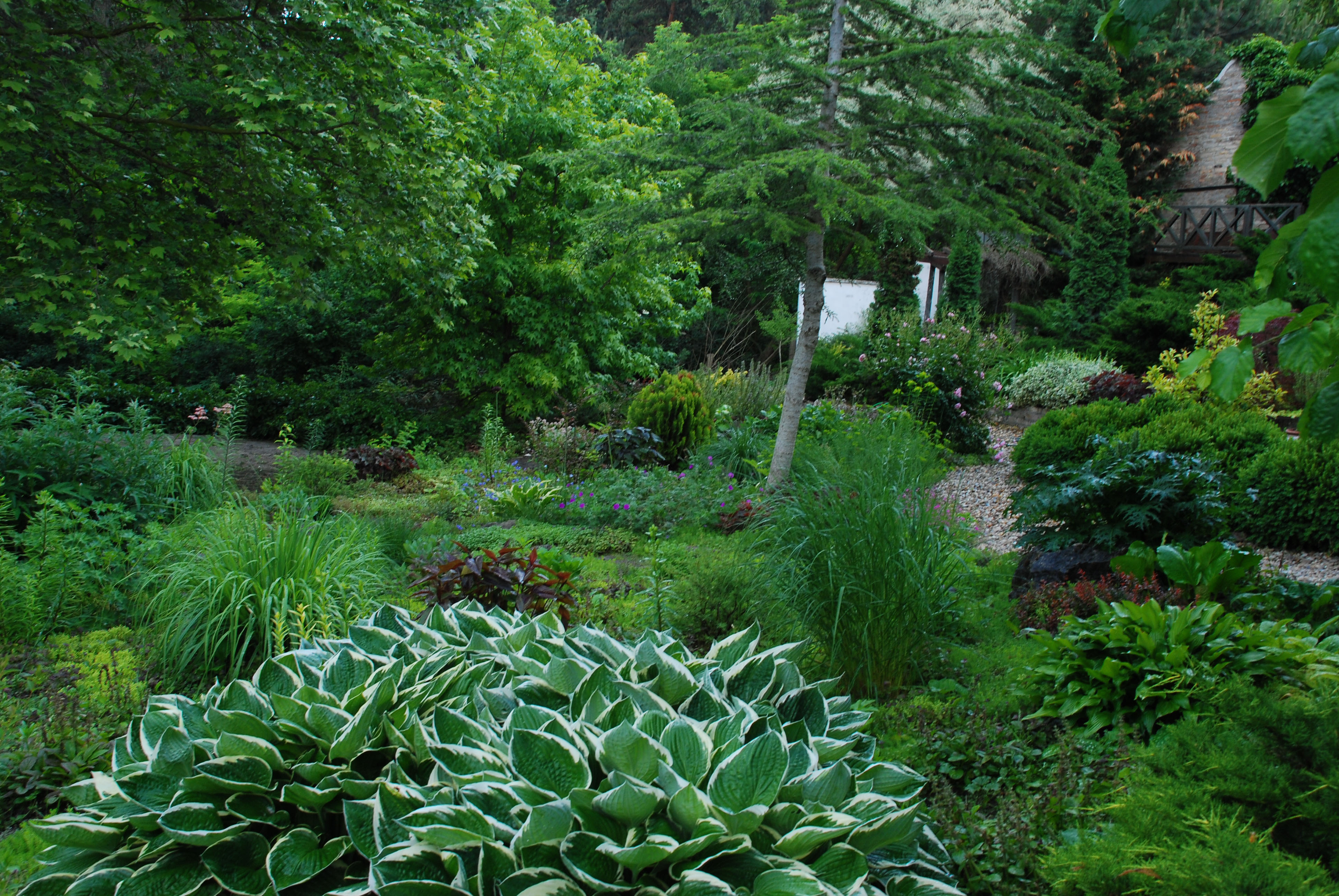
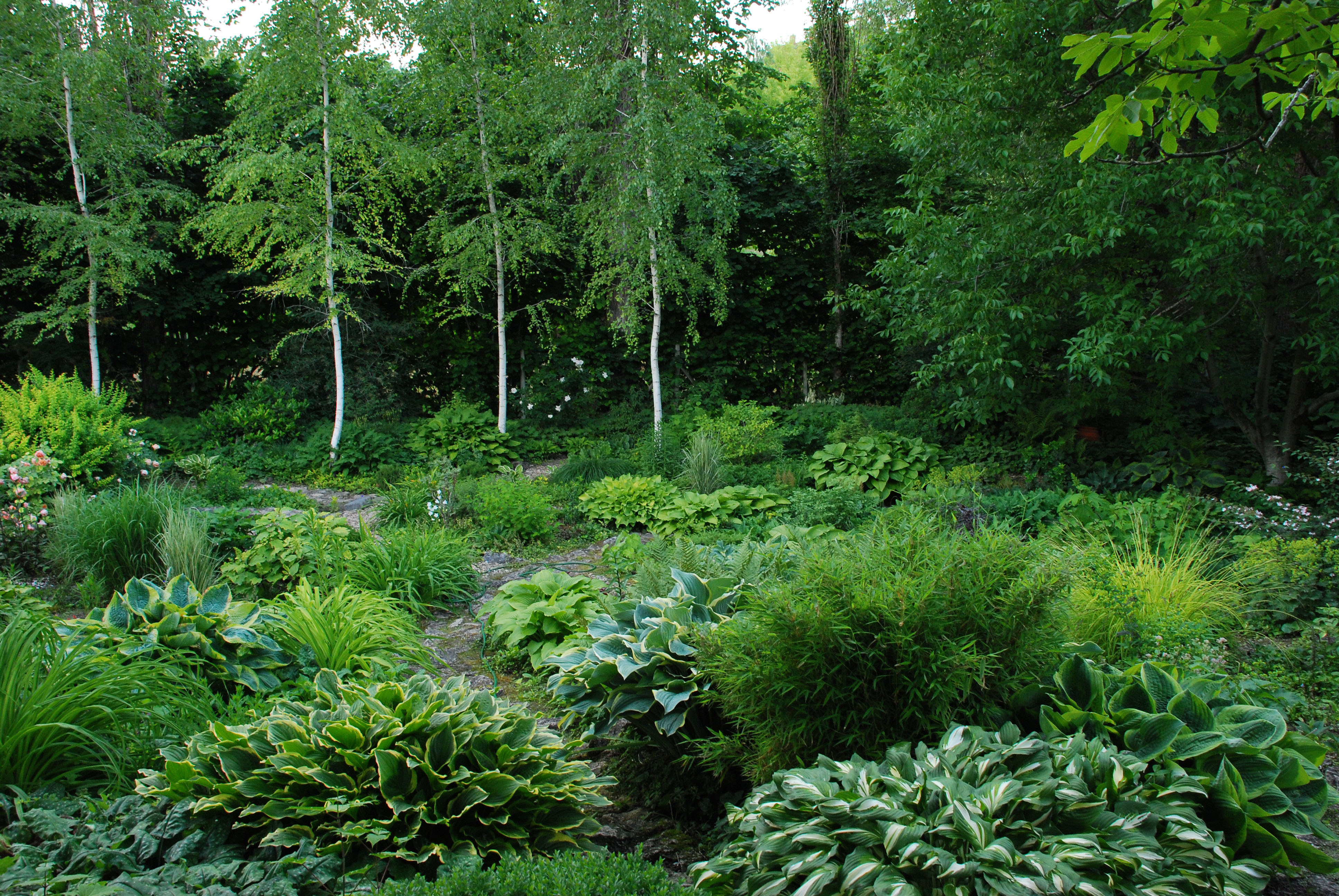
 Until they are followed by the rest, this part is made exciting by the contrast of large-leaved hostas and filigran grasses.


 Rosenmeile: The page of Christine Meile, rose gardener and photographer (as well as a dog fan). Wonderful and rich in information.
 RogersRoses: The web version of that fabulous English book whose illustrations incited us ten years ago to establish our rose garden and that I have been regularly browsing ever since. The internet version has a very good search function.
 RoseFile: Another rose database with many good images and information, and with a special page on roses for cold climate.
 Peter Beales Roses: The other world famous British rose nursery alongside with Austin’s. They sell more than 1300 classical roses, and have a quite fantastic offer concerning wild roses and historical roses. The page has a very good advanced search function that also includes the roses’ demand of light and soil, an information otherwise hard to obtain. (Nevertheless, take with caution the periods of blooming reported by them.) Their roses curiously tolerate better the change of climate between Britain and Hungary than those of Austin.
 Amelia
 Blush Hip
 Cardinal de Richelieu - Violacea - Sissinghurst Castle - Amelia - Hippolyte
 Cardinal de Richelieu
 Charles de Mills (the light pink one to the right: Amelia)
 The simple one: Complicata; the full-flowered: Hippolyte.
 Empress Josephine
 Empress Josephine - Amelia - Charles de Mills
 Erinnerung an Brod
 Hippolyte
 In the forefront: Hippolyte. In the background, to the left: Rosa gallica officinalis. In the background, to the right: Rosa Mundi.
 Indigo
 In the forefront: unknown rose (it was mixed up in the nursery and I do not know its name). In the background: Erinnerung an Brod.
 In the forefront: La Sancta. Behind it: Trigintipetala
 Sissinghurst Castle
 Trigintipetala
 Violacea