Showing posts with label Persicaria. Show all posts

Sunday, July 15, 2012

Tuesday, July 3, 2012

Purple and white


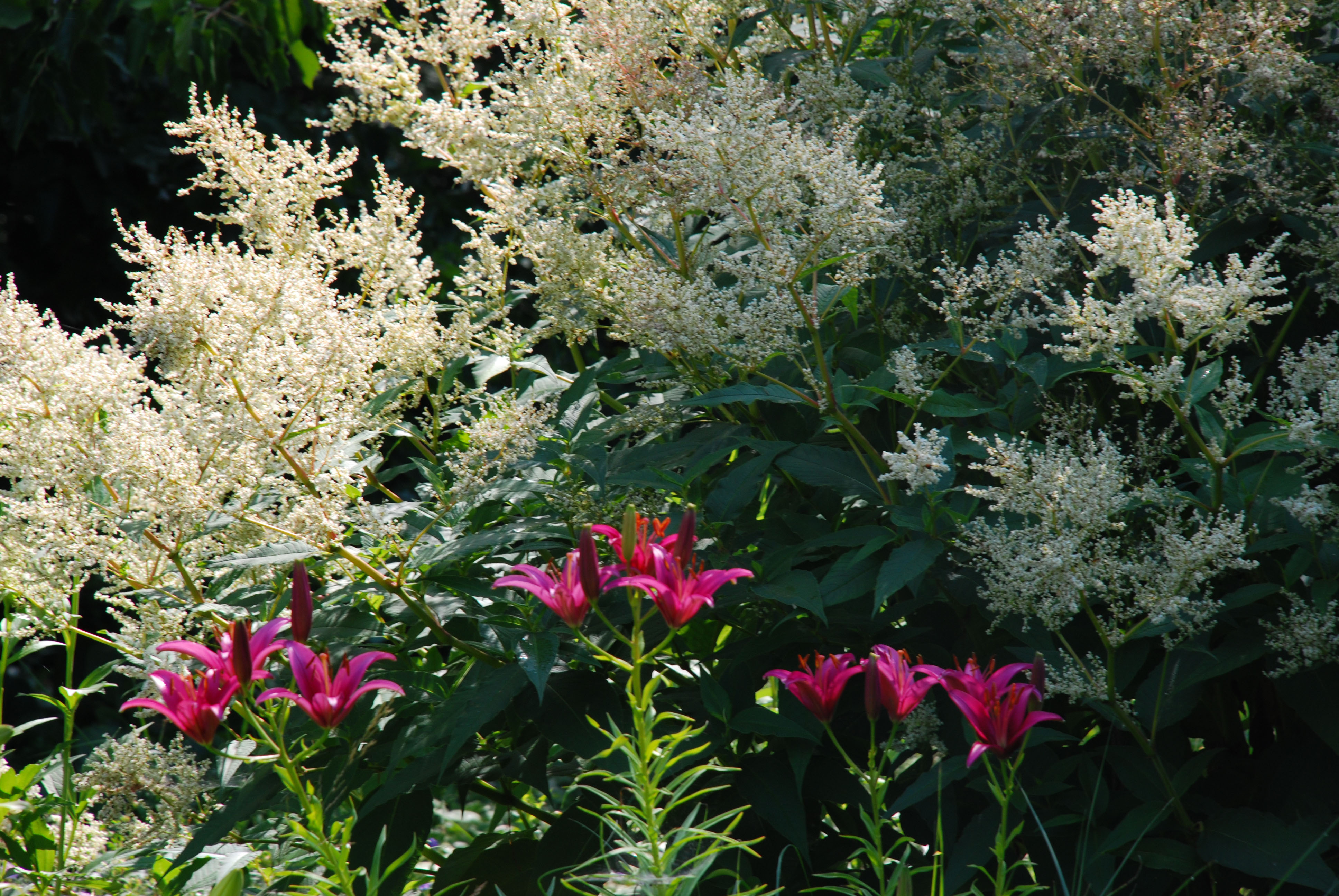
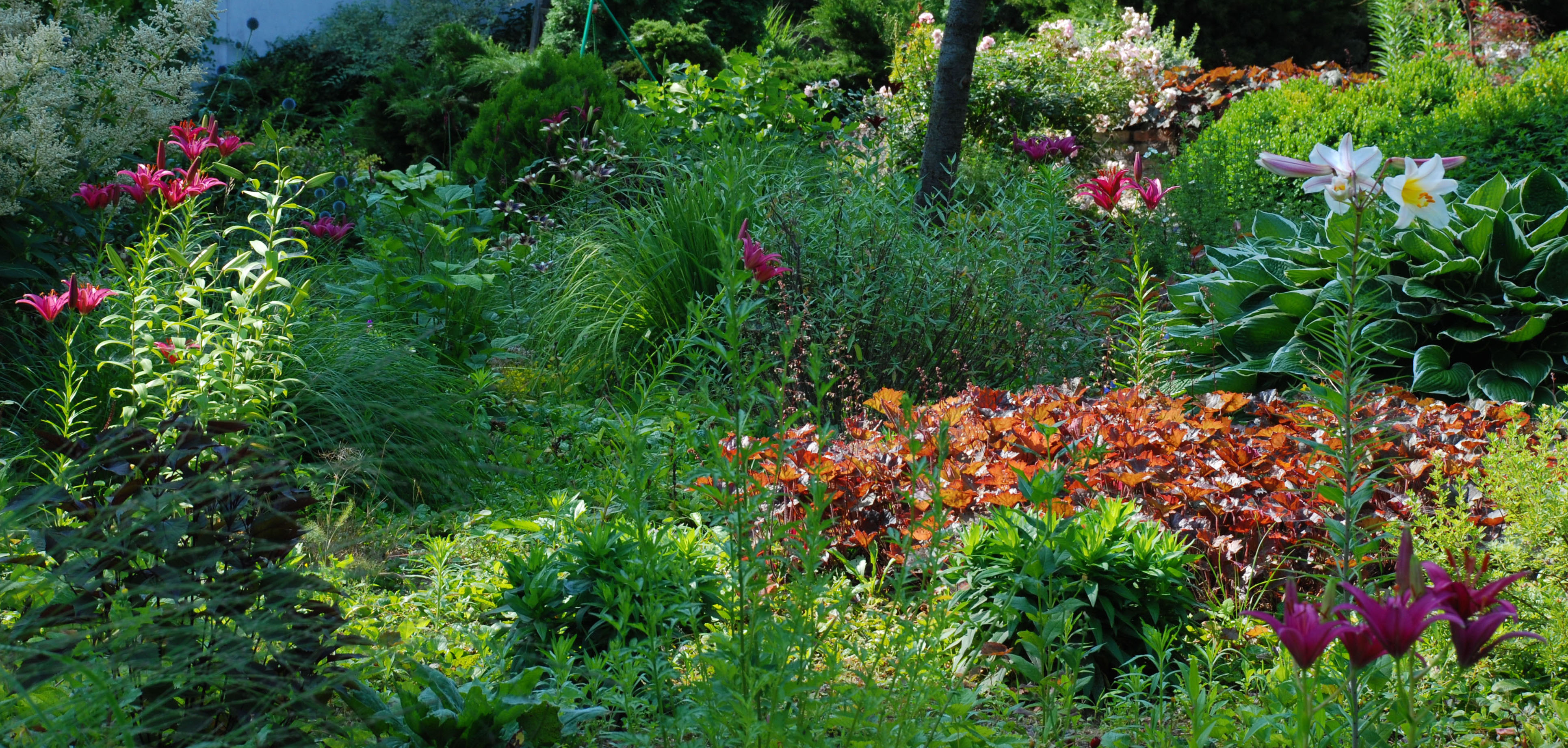
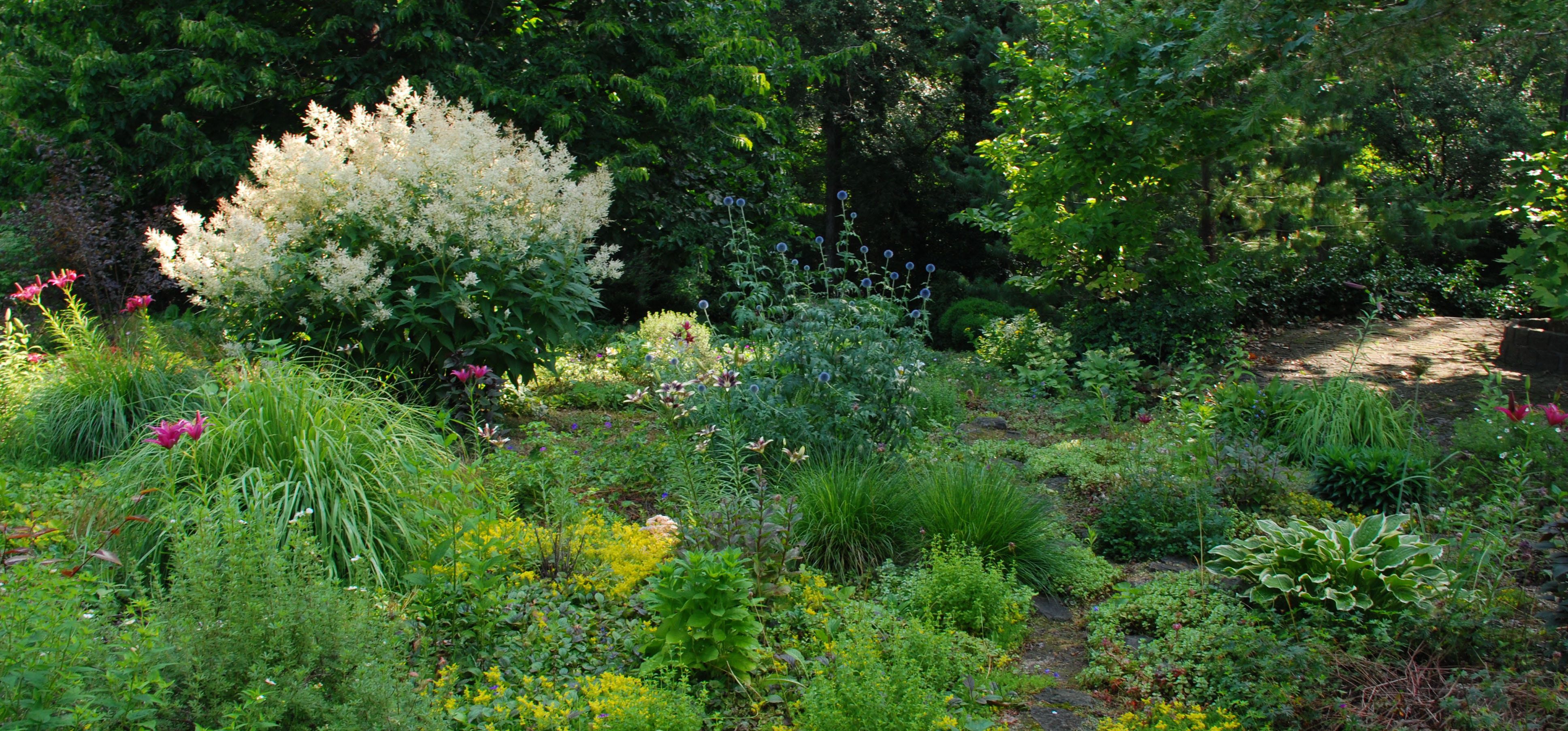
With the help of the cherry-red lily in the previous post and the white Persicaria polymorpha, I can demonstrate not only the mass application of one element, but also the composition technique by virtue of which one or two colors – in our case, purple and white – appear in different forms.


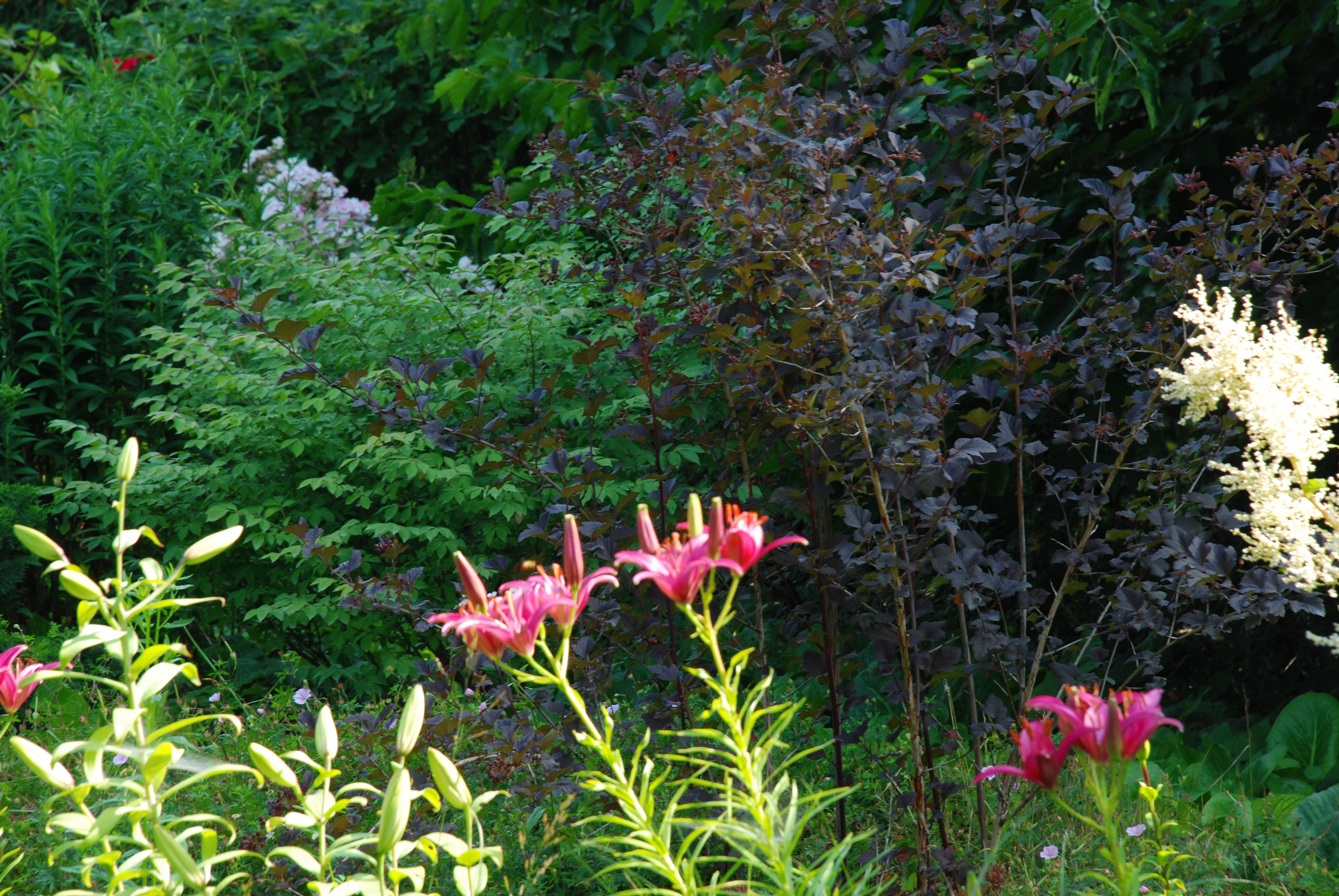
If you want some purple in the garden, first of all you should choose a variety of purple leaves. We have this Physocarpus opulifolius 'Atropurpureus' shrub in the middle of the large upper perennial bed, which offers a great purple surface from spring till autumn.


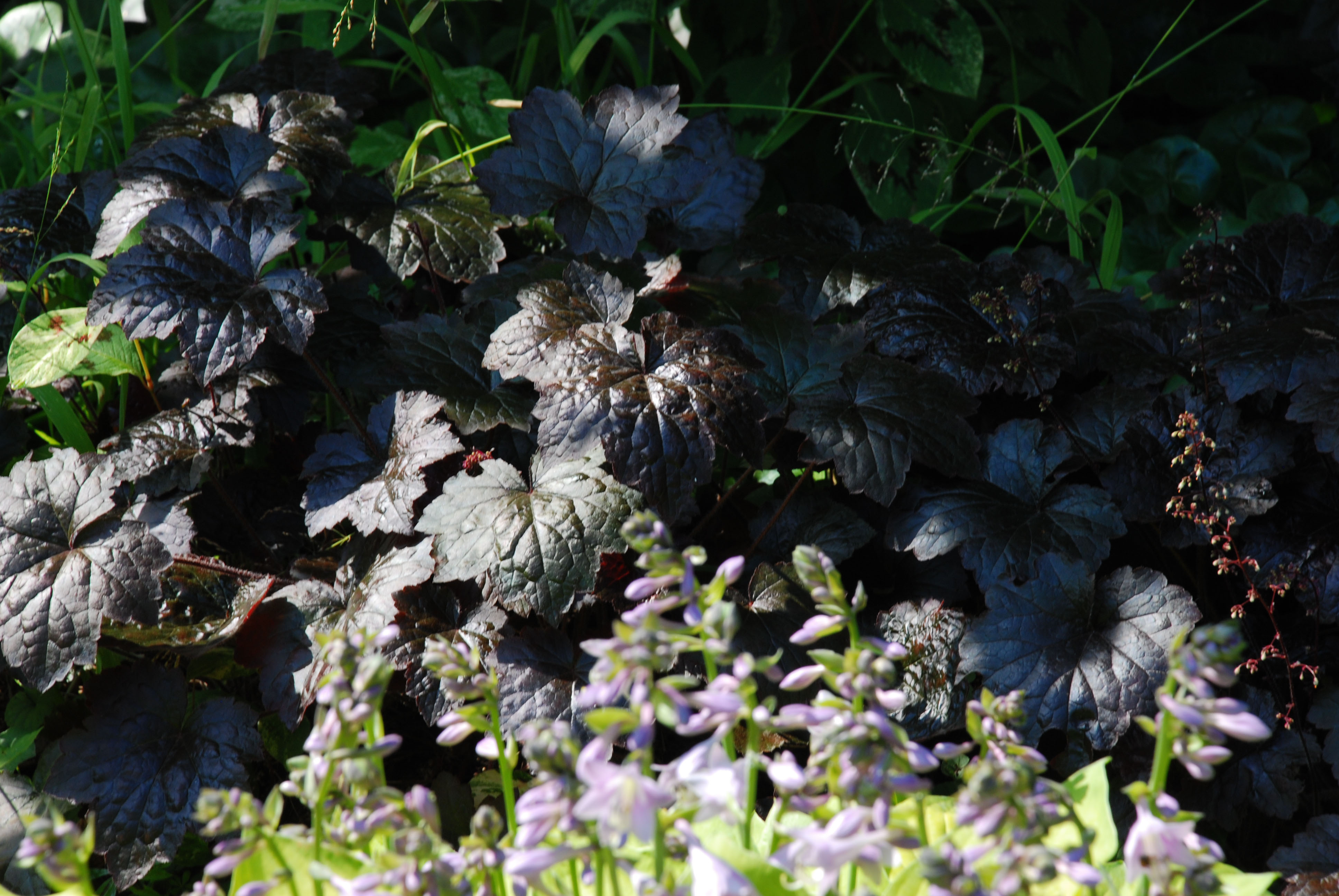
From the perennials, purple-leaved Heuchera 'Palace Purple' (above) and Eupatorium rugosum 'Chocolate' both work well at us. I apply them in repeated patches in the garden.


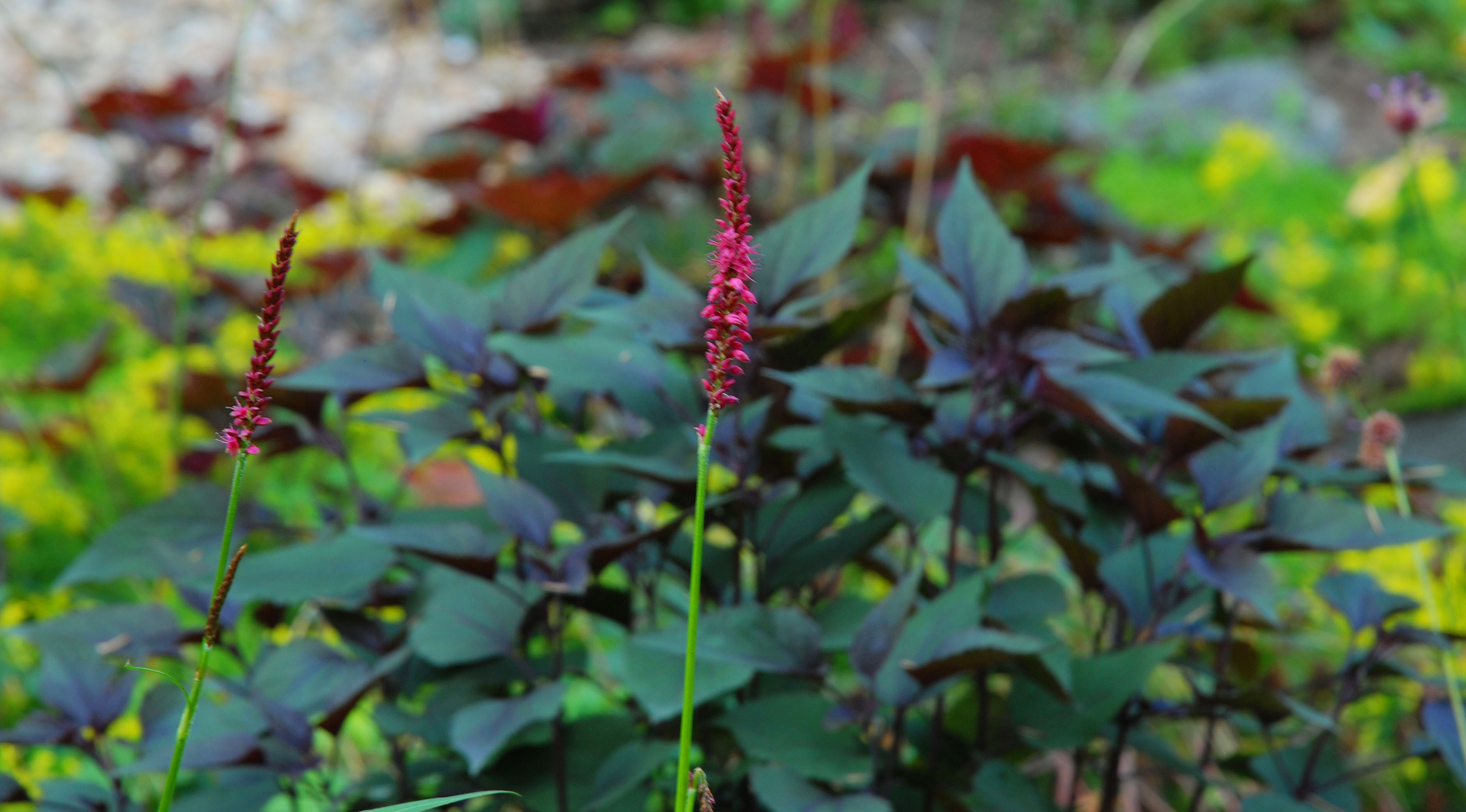
The purple leaves of Eupatorium strengthen the purple hue of the flower of Persicaria amplexicaulis 'Firetail', planted next to it. The same flower would appear rather red when planted next to a yellow one.


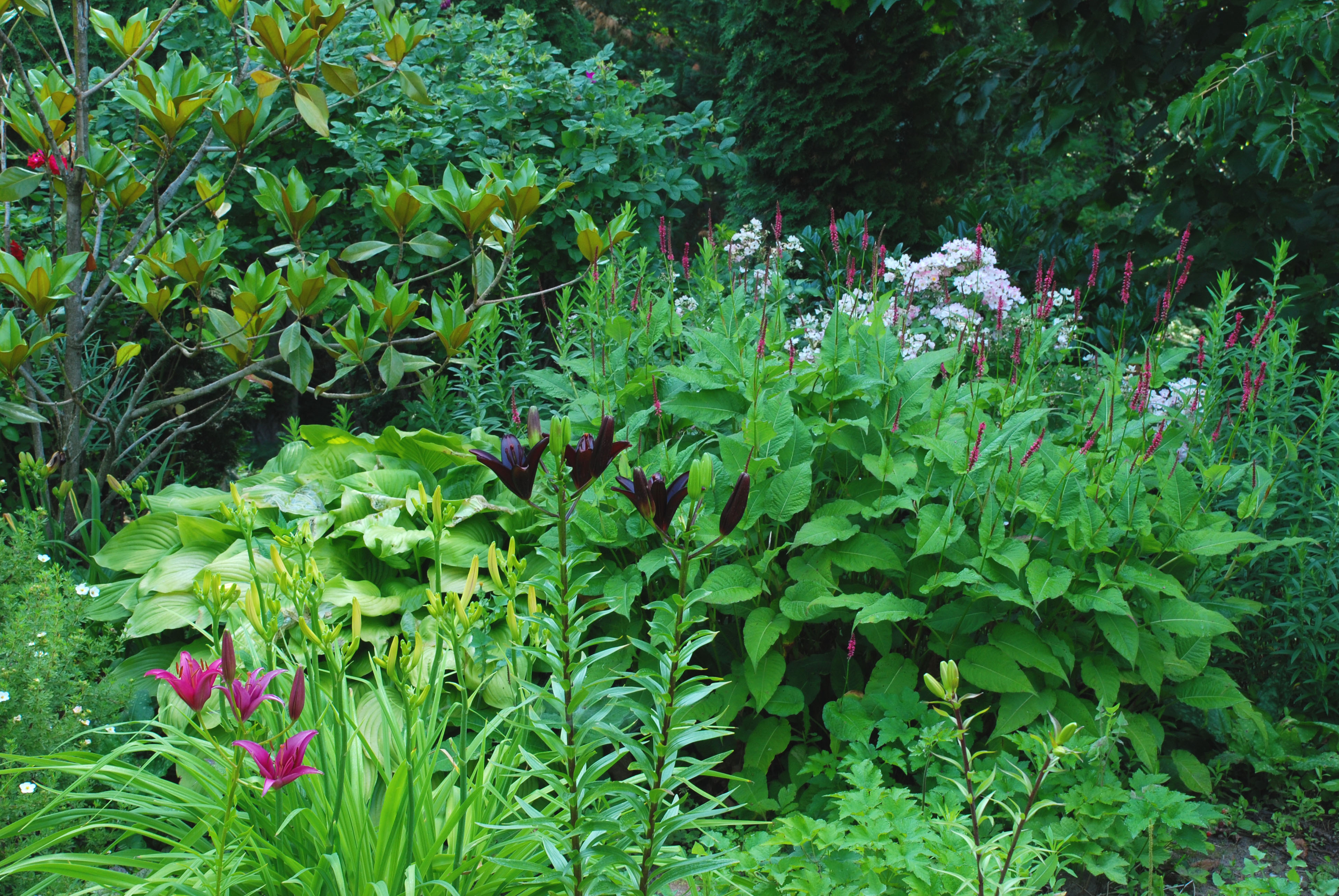
The white flower of Lilium regale also has purple hues, which connect the purple and white elements.


The flower of Rosa 'Ballerina' and the pimp in the lower left corner play a similar function. Between them various shades of purple are repeated (the two lilies, Persicaria, and the red rose in the upper corner).


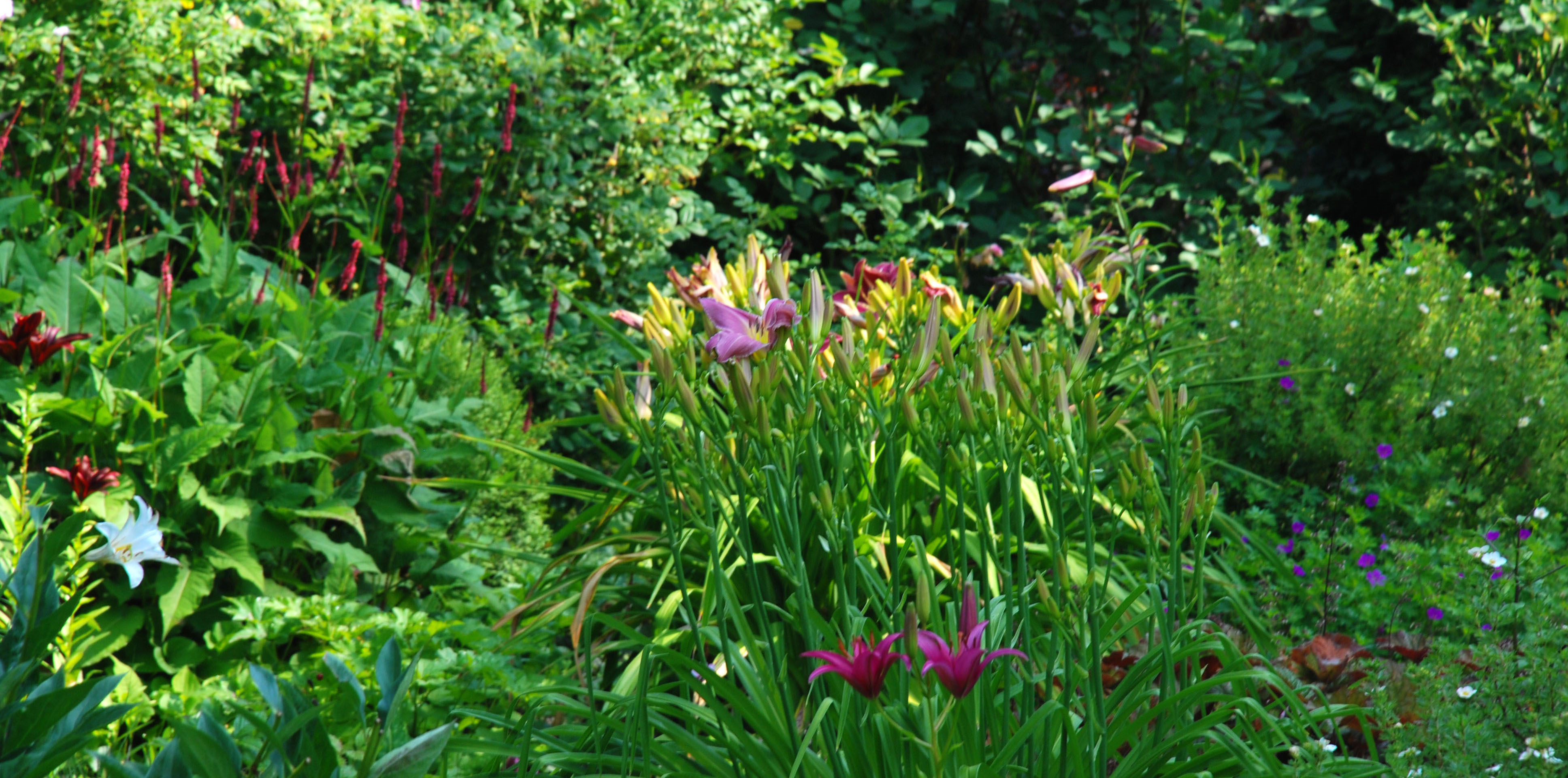
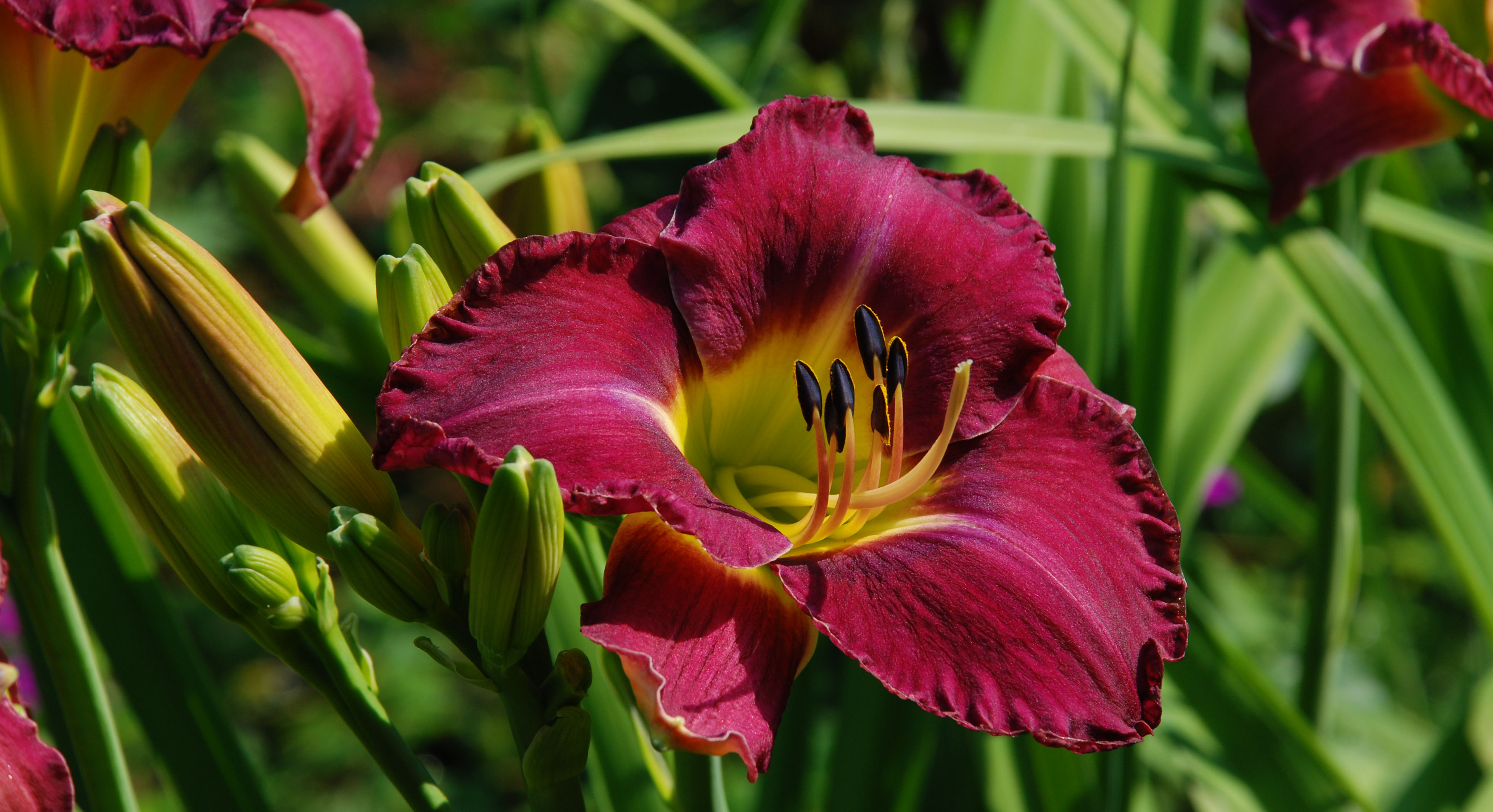
It is always very effective if similar colors appear in opposite forms, as in the thin flower of Persicaria and the wide one of Hemerocallis.


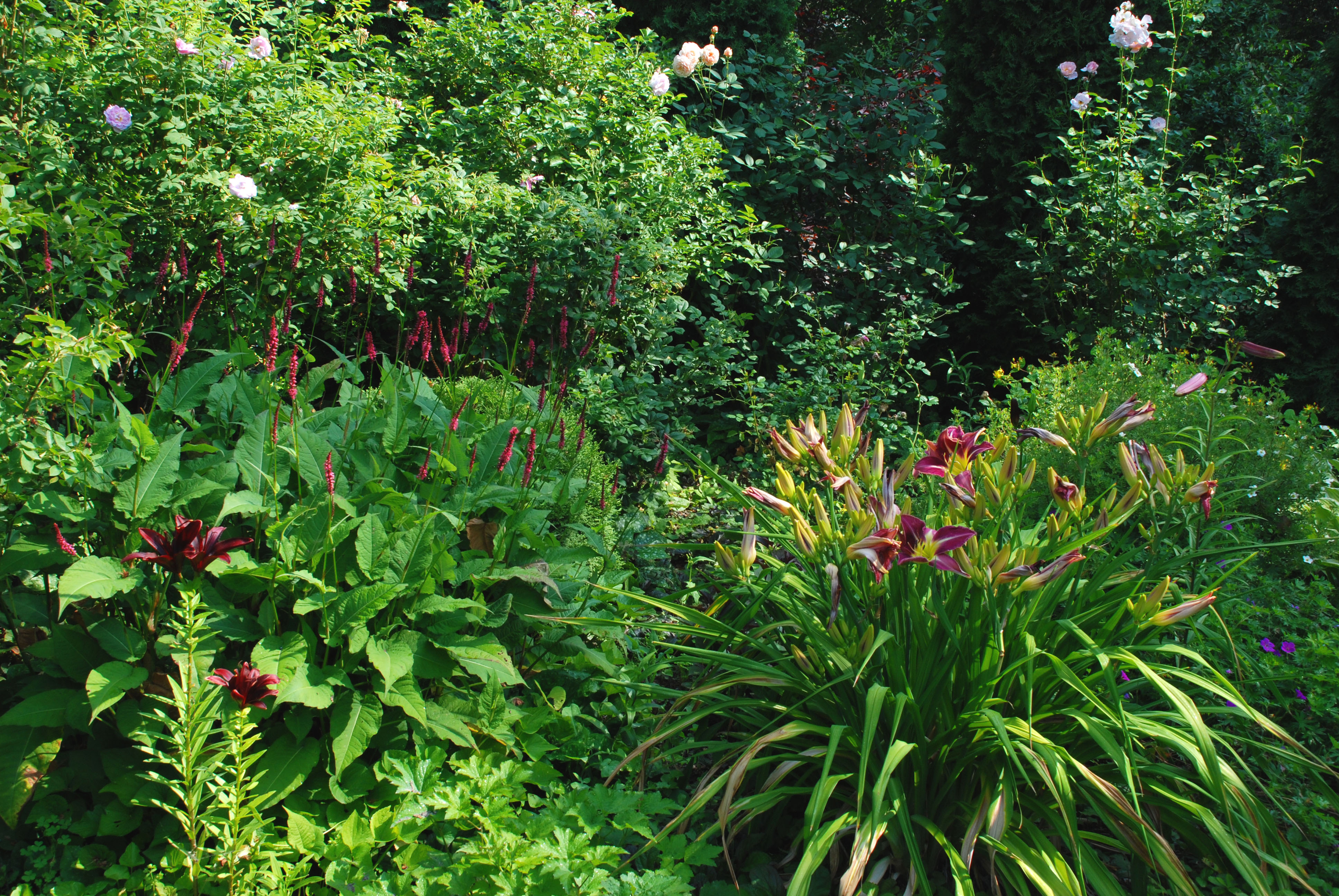
The Hemerocallis in the picture show various shades of purple with small formal and color differences, and these give a feeling of abundance.


Here, purple and white is repeated in various flowers and leaves.


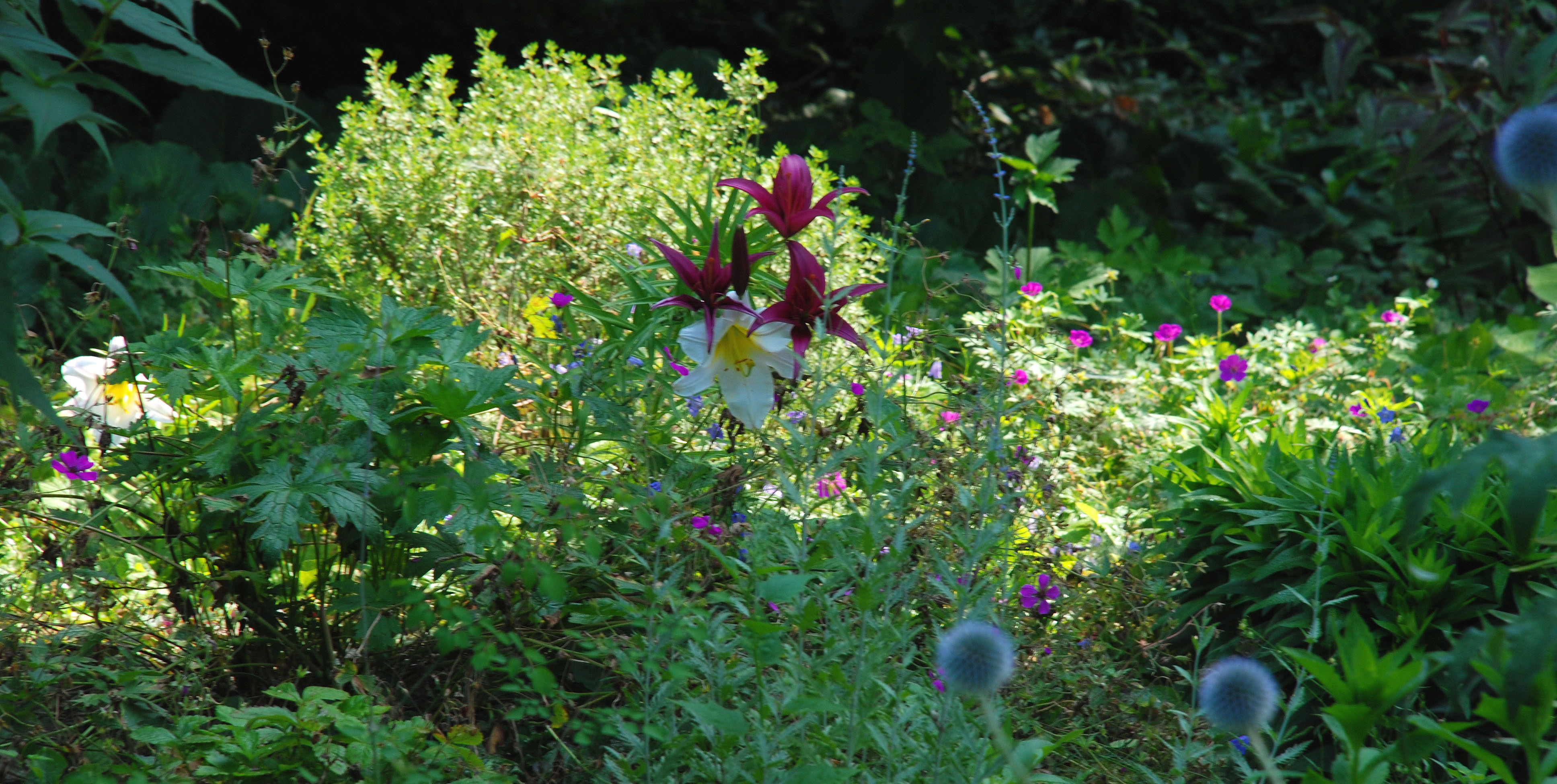
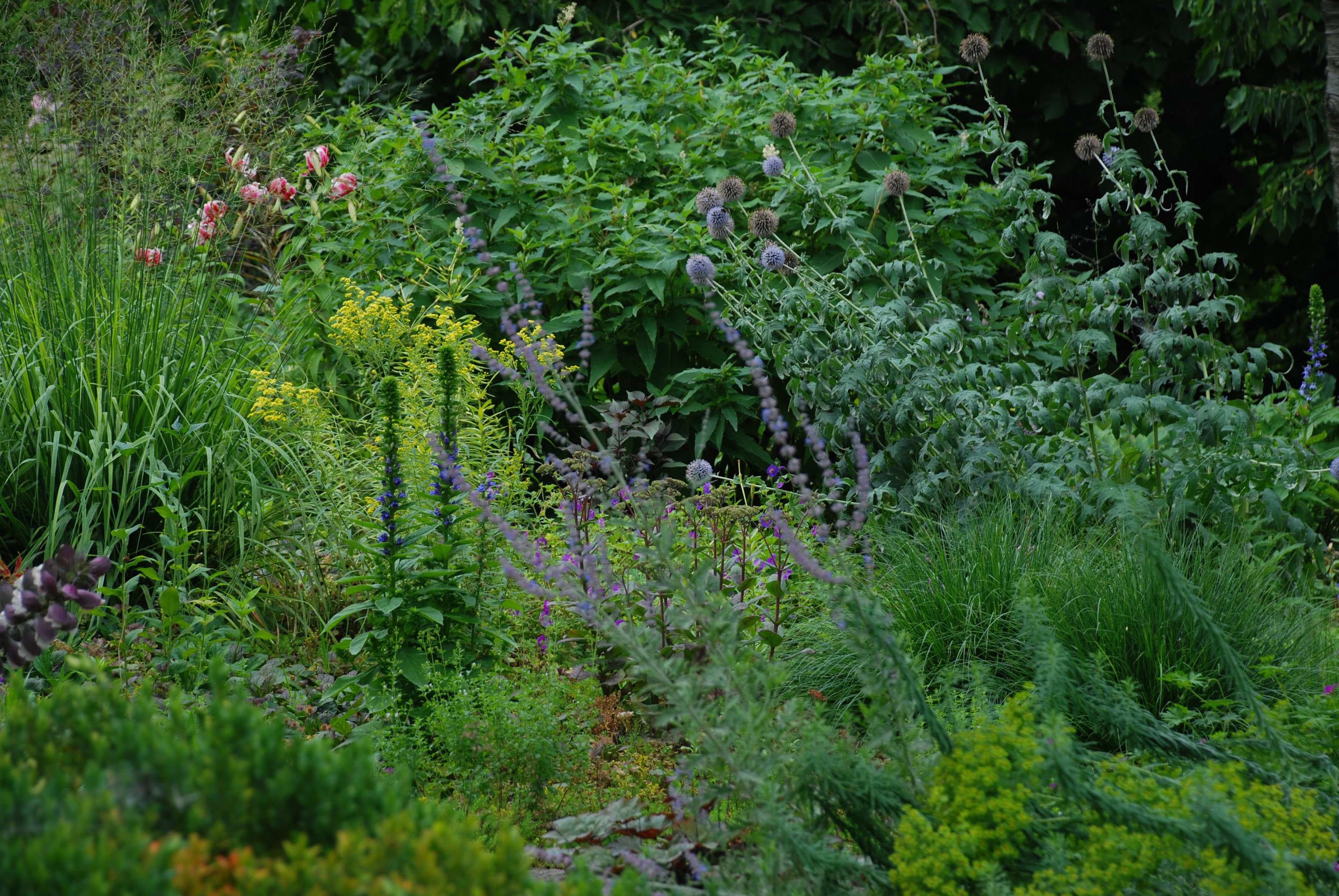
Finally, let us see how one can overcome the duality of purple and white. The flower of Geranium 'Patricia' is in harmony with the lily’s purple, but it already has enough blue shades to also harmonize with the fine bluish-purple flowers of Campanula rotundifolia. And this coincidence already can invite into the composition the bluish flowers of Echinops banticus.


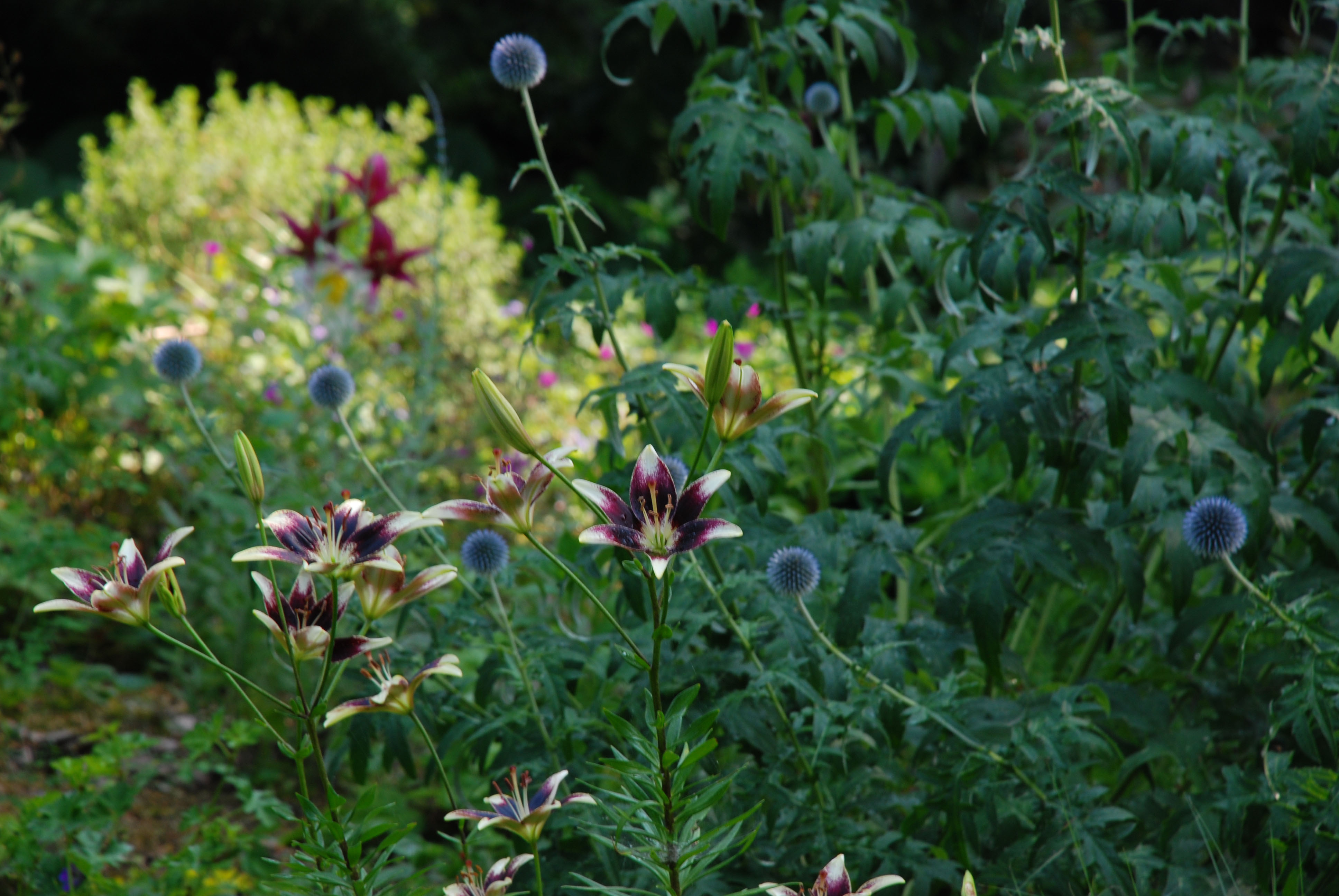
The next composition follows the same technique.


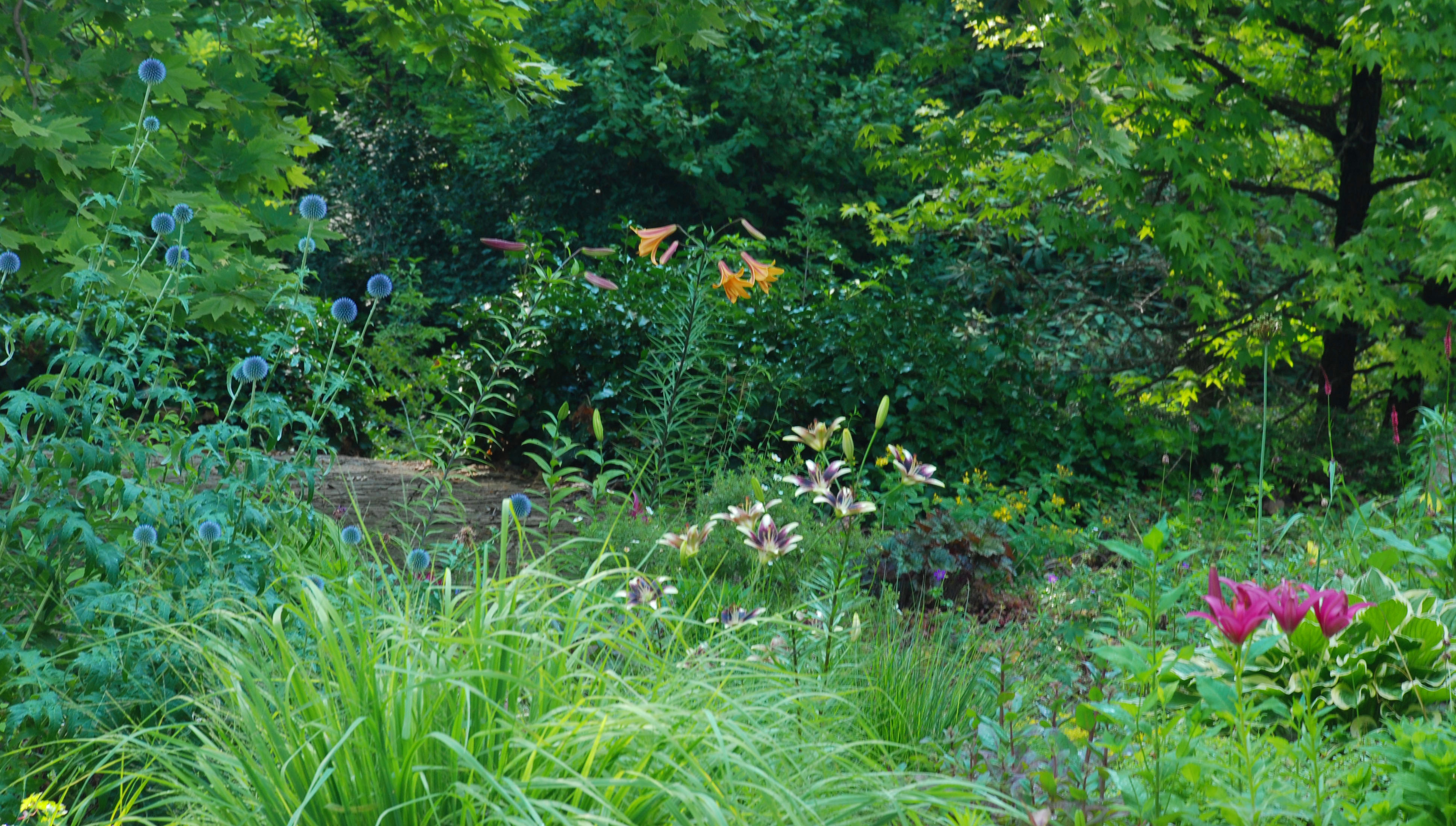
Here I used the bluish hue of the lily’s purple. As the two compositions are next to each other, they strengthen each other’s effect, and thus the Echinops fits nicely into the overall picture.


And if we did it all with enough discipline, then we can even allow ourselves to smuggle into the composition an orange lily (Lilium 'African Queen'), a counterpoint to Echinops both in its color and its form, by exploiting the purple shade which is present in its flower.

Sunday, July 24, 2011

Approaches


This is a composition which already shows what I would like. In the autumn I still have to change some elements in it, but I hope that later I won’t. Erika asked last week how I’m doing that my assemblies are always successful. Well, they are not always, but I do not give up, and I do it again and again in every place until I am satisfied with it.


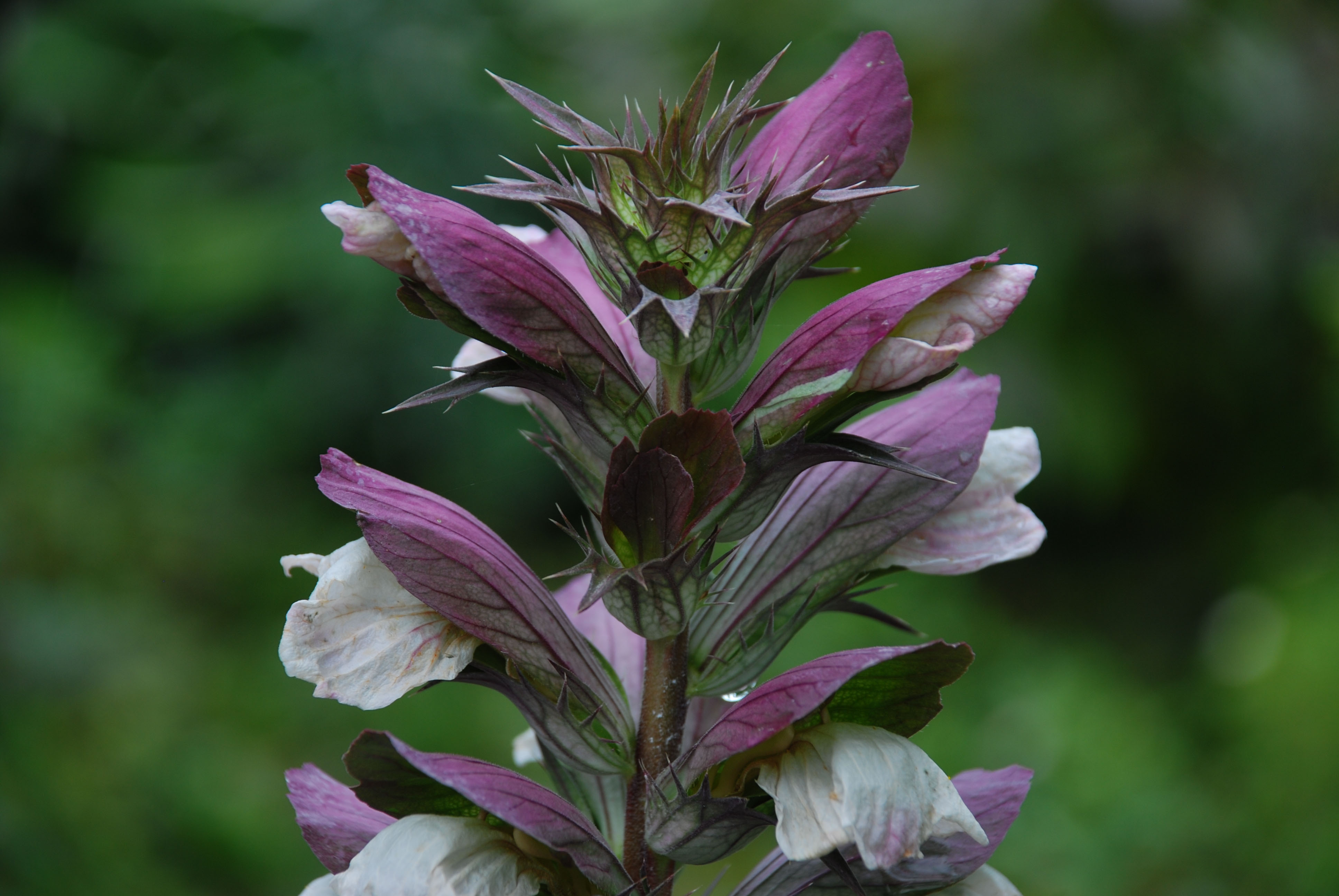
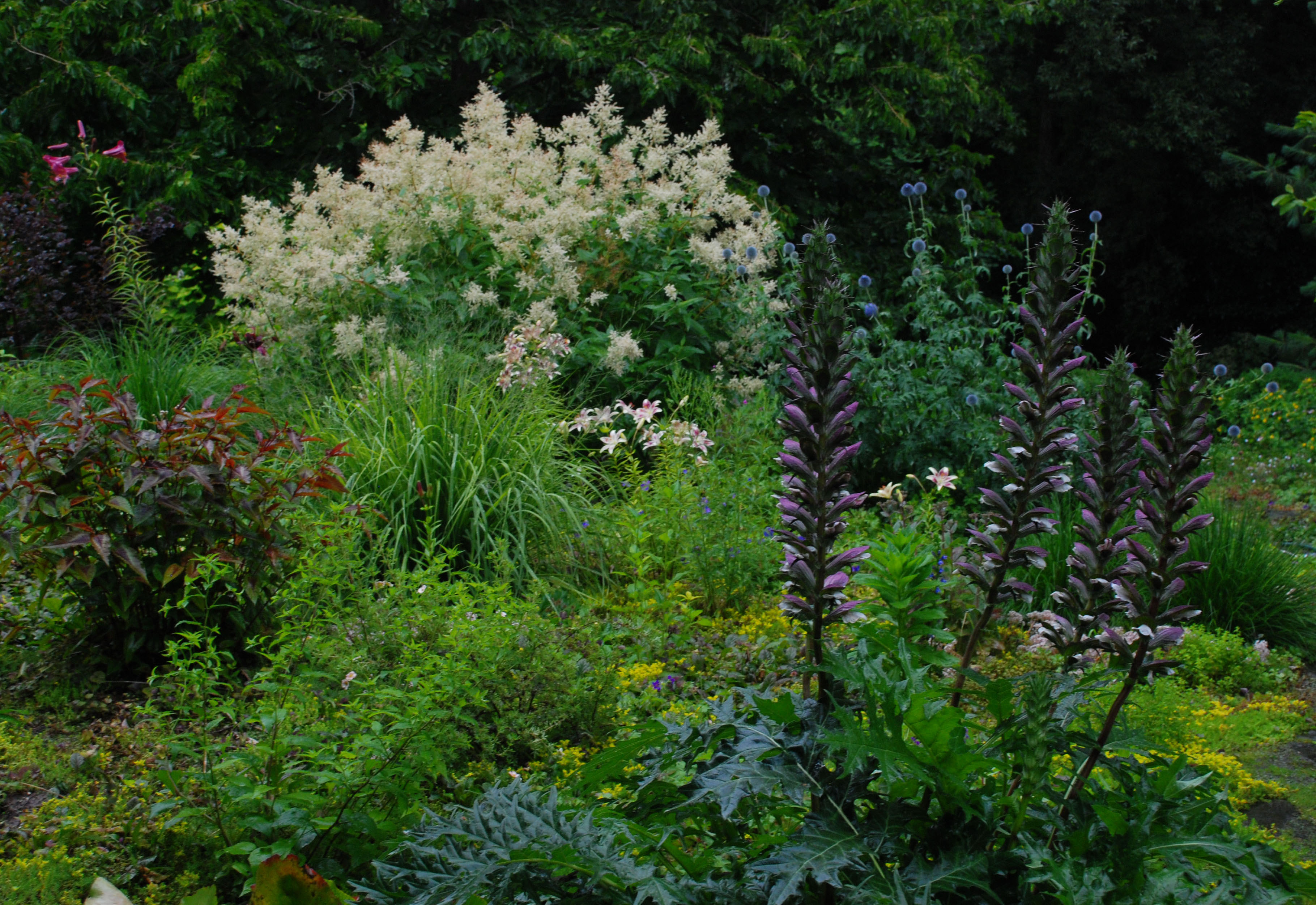
Some details from the same area. This is a close up of the flower of the often photographed Acanthus hungaricus.


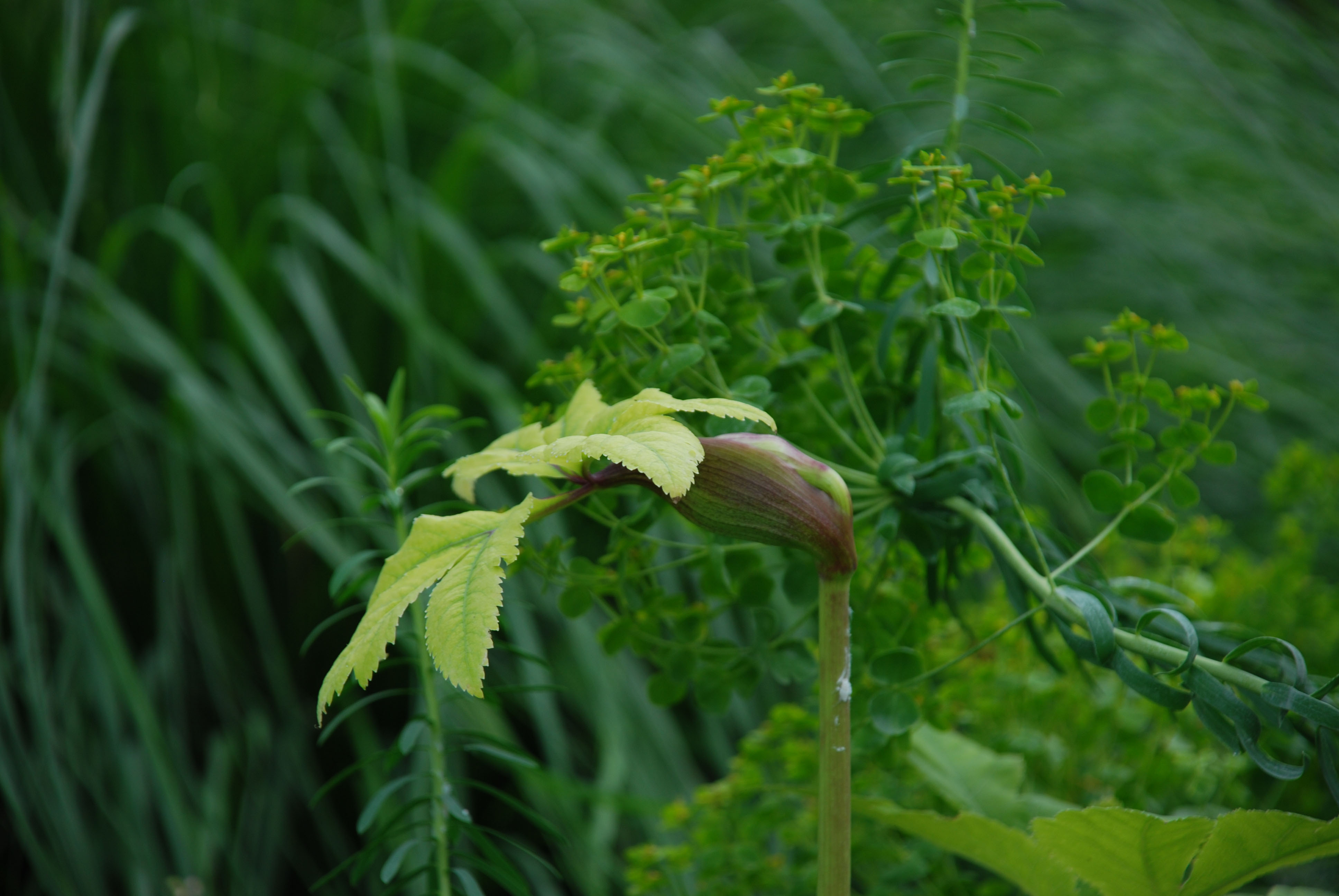
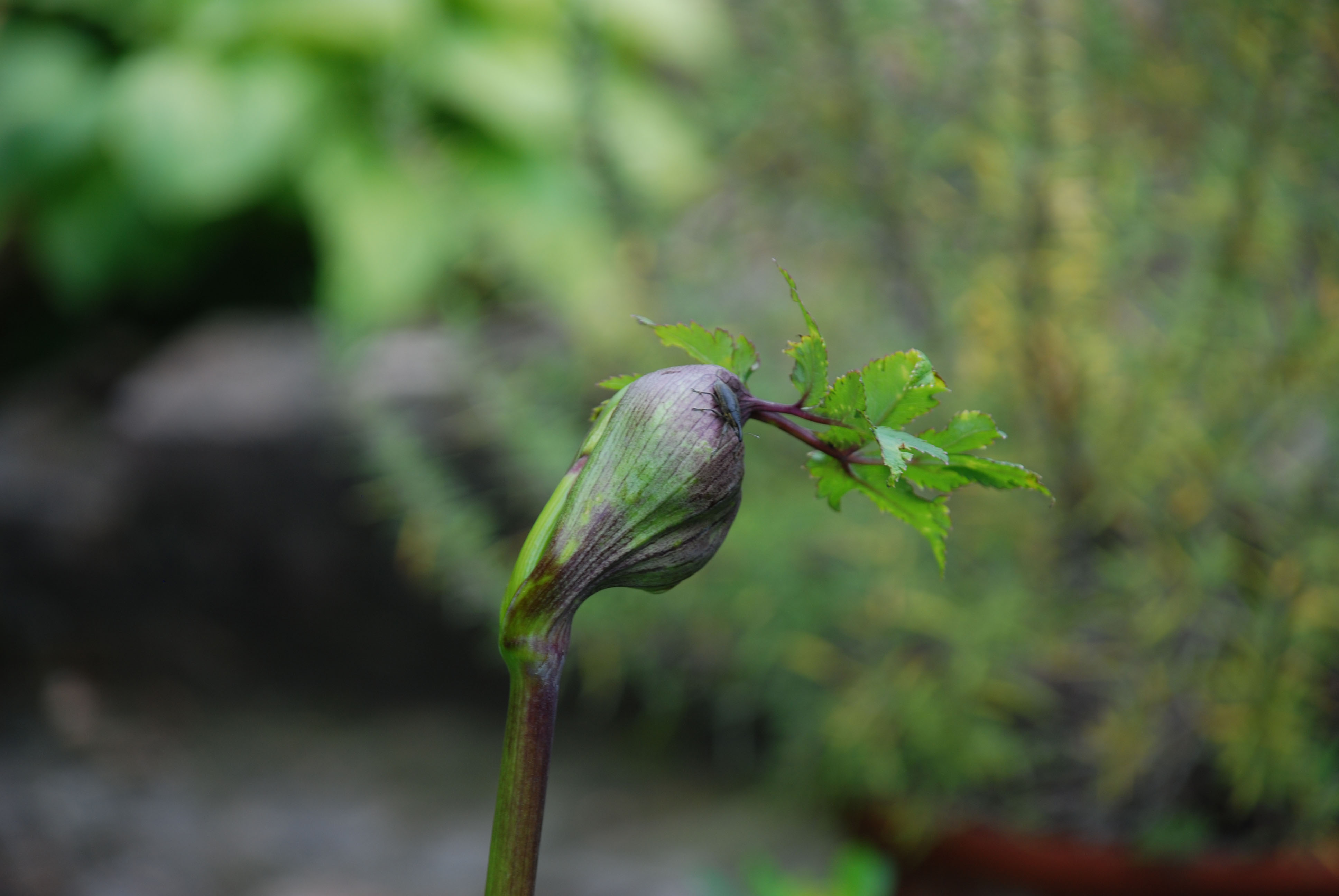
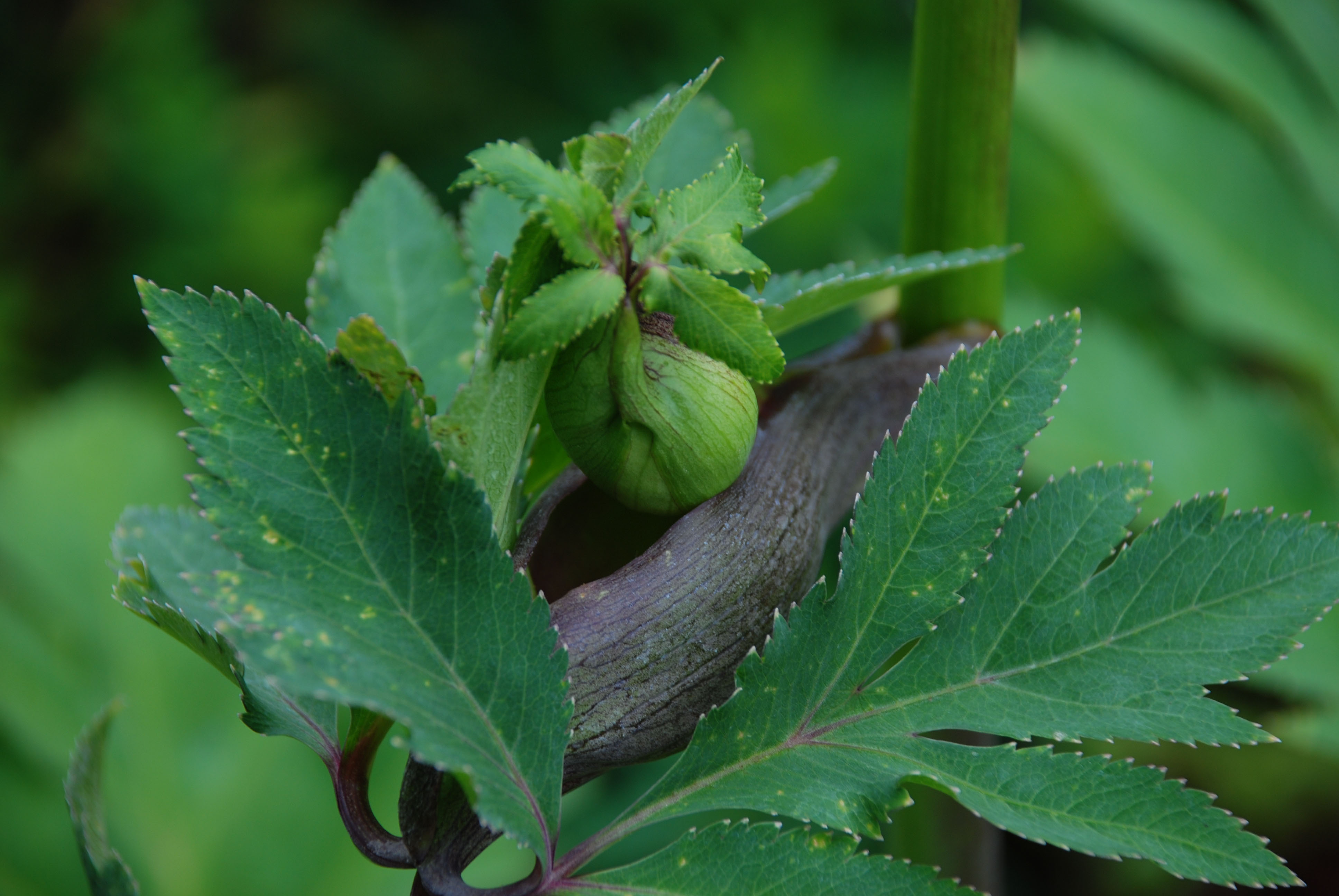
Angelica gigas. Already in the bud it is beautiful. When it will open, it will have eggplant-colored flowers. It is short-lived, but as such perennials in general, it strongly scatters its seeds.


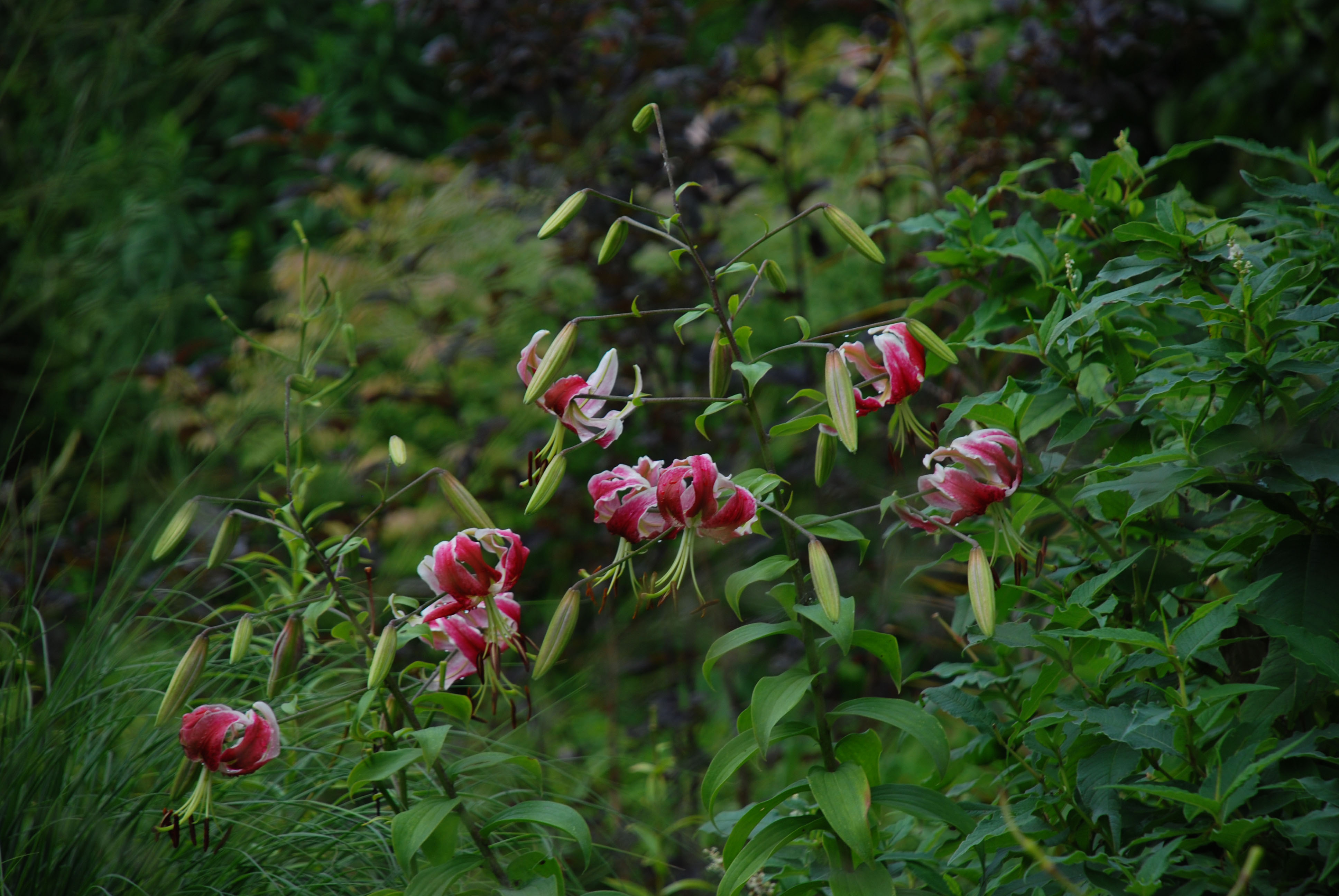
This is Lilium martagon. I regard it fabulously beautiful, and it is one of the easiest-to-keep lilies at us.


This is a Solidago virga aurea hybrid, called Citronella, from the Hegede Nursery. Its main attraction is that it does not spread and blooms even in part-shadow.


Eupatorium rugosum 'Chocolate'. It feels well from full sun to full shade, but it requires lots of water.


Sedum 'Matrona'. It basically fits warm, dry places, but it is so tolerant that even lives at us.


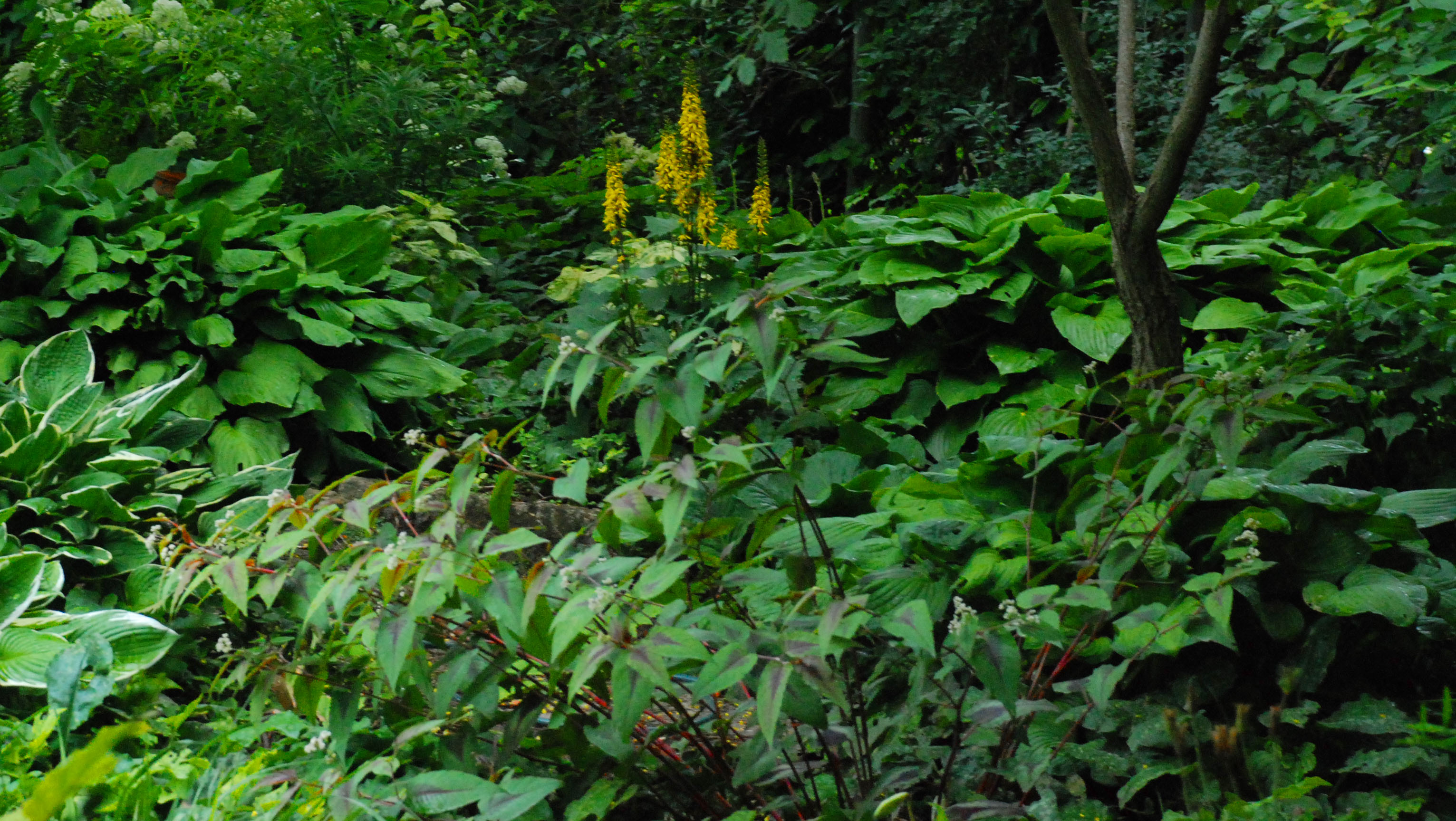
Persicaria virginiana 'Painter's Palette' is absolutely not as fastidious as one would think on the basis of its leaves. It requires semi-shade or shade, and well-watered space, but apart from this, it is very tolerant: we have the whole garden full of it. I have seen it in the Mocsáry Nursery, but I do not know whether they already sell it or just experiment with it.


Two more Angelica gigas.


And another beautiful ornamental letter: Persicaria microcephala 'Red Dragon'. Zsuzsa Hegede said a couple of years ago that they have lot of them, but nobody buys them. I don’t know whether the situation has changed since then, but it is worth to ask them.
Sunday, July 3, 2011

Sunday, October 17, 2010