 Again the Lord spoke to Ahaz, “Ask the Lord your God for a sign, whether in the deepest depths or in the highest heights.” But Ahaz said, “I will not ask; I will not put the Lord to the test.” Then Isaiah said, “Hear now, you house of David! Is it not enough to try the patience of humans? Will you try the patience of my God also? Therefore the Lord himself will give you a sign: The virgin will conceive and give birth to a son, and will call him Immanuel." (Isaiah 7:10-14)
Friday, March 25, 2011
Fruit-Grafting Lady Day
Again the Lord spoke to Ahaz, “Ask the Lord your God for a sign, whether in the deepest depths or in the highest heights.” But Ahaz said, “I will not ask; I will not put the Lord to the test.” Then Isaiah said, “Hear now, you house of David! Is it not enough to try the patience of humans? Will you try the patience of my God also? Therefore the Lord himself will give you a sign: The virgin will conceive and give birth to a son, and will call him Immanuel." (Isaiah 7:10-14)
Sunday, March 13, 2011


Saturday, March 5, 2011
Basket
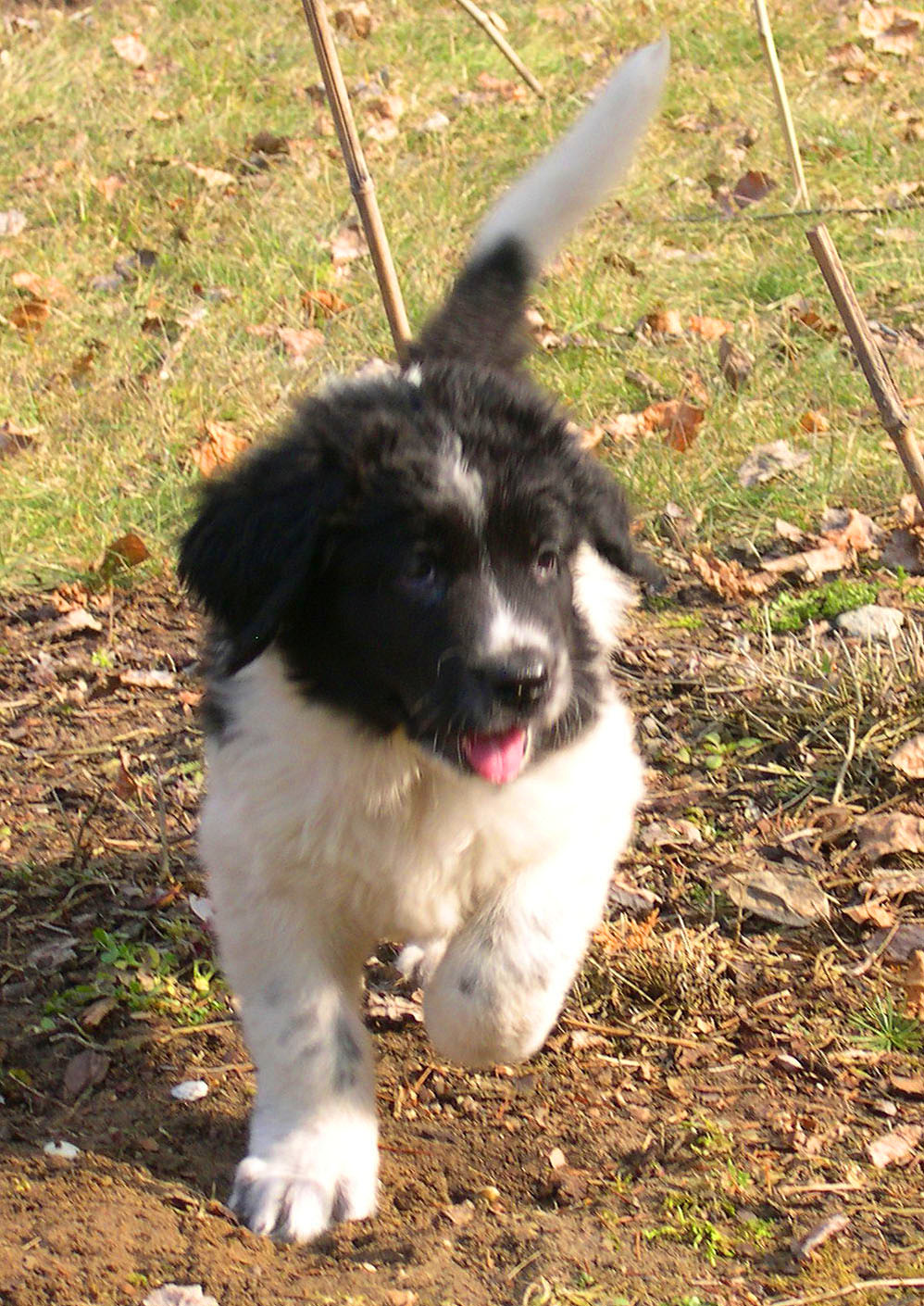
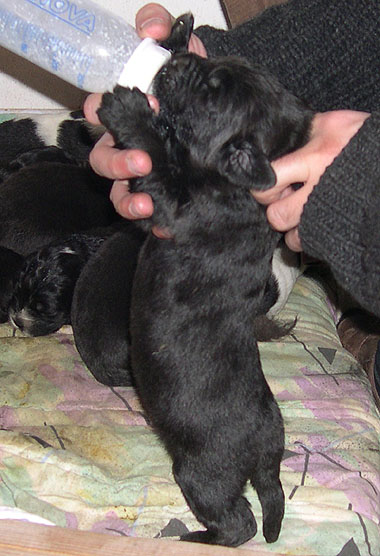
Brumi was born five years ago in January, the first of eleven puppies. For her mother Vidra this was the first – and as we had to admit, the last – litter, so she almost had no milk, and I had to feed the puppies five times a day as I had done to Muska.
The kids were intended for our friends, but Brumi was born with such a severe dysplasia that we decided to keep her for ourselves. Our veterinarian told us that from the age of three she would gradually deteriorate and would finally die in great pain.

Brumi slept away yesterday morning, when the computer stopped short. At the age of five, without pain, after having apparently prepared for it for weeks and having taken leave of the other dogs, with that peaceful final breathing out as newfoundlanders used to put down their head like “well, now everything is all right”.
We take leave of her and say thanks for her with the poem sent by Wang Wei at their birth.
| PRIMERO se toma una mimbre, y se la pone en agua, para que pierda altanería, se haga dulce, mandible, y tenga amor; luego se la trenza como un sueño, y, cuando ya está hecho el cesto, puede ponerse en él la ropa blanca, unas frutas rojas, doradas, o un gatito. A veces crujirá en la noche; pero así se hizo el mundo, y así, a veces, se lamenta. | FIRST take a wicker and put it in water so that it gets rid of its arrogance, it becomes soft and pliable, it fills up with love; then braid it like a dream, and when the basket is ready, you can put in it the clean clothes, some red and golden fruits, or the kitten. Sometimes it will creak in the night but this is how the world was made up and this is how, sometimes, it complains. |

Sunday, February 20, 2011

Friday, February 18, 2011
Those wonderful barberries! 3. Berberis x mentorensis
Love at first sight, again. I bought it in the New Garden some 5-6 years ago as a thirty centimeters high bush, as I was completely fascinated by its Japanese habit. It soon became clear that it also develops well on the heavy soil of our cold, half-shady garden.
 The barberry to the left on the picture is an already more or less grown-up bush, but still maintains its beautiful Oriental forms. This feature alone would be enough to make it a first-class bush, but there are two extras as well…
 …that is, its autumn colors and its berries that remain on the bush all winter long.
 It grows its berries by early autumn. In the beginning they are white, but by late autumn they gradually become red and decorate the bush until early spring. Our bush produces an abundant crop in every year.
height: 150 cm
width: 150-200 cm
lighting: sunny-part shade (At us it is on a rather shadowy spot.)
water demand: At us it grows on a well-irrigated land, but it is said to be drought tolerant. True, the same sources write that it does not regularly produce berries. Perhaps for a good crop it needs good irrigation.
hidegtűrés: Z5- Z8
width: 150-200 cm
lighting: sunny-part shade (At us it is on a rather shadowy spot.)
water demand: At us it grows on a well-irrigated land, but it is said to be drought tolerant. True, the same sources write that it does not regularly produce berries. Perhaps for a good crop it needs good irrigation.
hidegtűrés: Z5- Z8
Monday, February 7, 2011


Friday, January 28, 2011


Monday, January 24, 2011


Monday, January 17, 2011


Sunday, January 9, 2011
Cottage Rose
 David Austin has found a perfectly fitting name to this rose, which is the very mirror of the country cottage. A classical pink rose with pleasant smell, and with a nice, loose bush form that stands out even among the roses of Austin. It blooms all over the summer, and it is continuously beautiful. If you have place only for one or two roses, you are advised to choose it.
 type: English rose (David Austin 1991)
height: 90-150 cm - At us always 120-150 cm.
width: 75-90 cm - At us always 120-150 cm.
tolerance of cold: Z5b (to -26 ºC) At us (Z5a, to -29 ºC) it is completely frost-resistant.
blooming: several times - At us it continuously blooms even in spots of strong part-shadow.
The data of the description come from Help Me Find where you can also see further pictures.
width: 75-90 cm - At us always 120-150 cm.
tolerance of cold: Z5b (to -26 ºC) At us (Z5a, to -29 ºC) it is completely frost-resistant.
blooming: several times - At us it continuously blooms even in spots of strong part-shadow.
The data of the description come from Help Me Find where you can also see further pictures.
Friday, December 31, 2010
One year of garden
Late in the autumn of 2009 Algeier Wendy, the editor in chief of the prestigious Hungarian Kertbarát Magazin (The Garden Lover’s Magazine) wrote me to congratulate to my gardening blog and to ask me whether I would feel like writing about something for the Magazine. I love to write, so I gathered a few themes to her to choose what to write about. She chose them all. This is how this series of articles was born.
In the January-February edition you can read Wendy’s interview with me. I am satisfied with it, and I even told to Wendy that if I made a sociological survey any more time in my life, I would happily employ her as an interviewer. In the March-April edition I write about ground covers. In May-June about – what else – the roses. In July-August about hostas. In the September-October issue I published two articles, one on bushes with beautifully coloring leaves in the autumn, and another on alternative fruits. Finally, in the November-December edition I wrote about plants that are also decorative in winter.
Just now I received my articles also in pdf format, so from now on you can read them both here, on Río Wang and in my garden diary. Unfortunately in Hungarian only, but I hope my photos will compensate you for the mysterious content. Click on the thumbnails to read or download them in pdf, depending on how you have set up pdf management.

We have also agreed on a series of articles for 2011, to which I gave the title English garden – in collaboration with nature. It begins like this:
The English garden is similar to Chinese cuisine not only as far as it is the best in the world in its own genre, but also in the fact that in order to reach this, it does not use special and expensive materials but ingeniously simple techniques. With their help, you can create even at home a splendid garden without any particular and expensive plants, a lot of money and much work.
To be continued in the Kertbarát Magazin, in the next year. Happy New Year to you all!
Friday, December 24, 2010
Wish you a blessed Christmas and Happy New Year!

Saturday, December 4, 2010
Squirrel
 These photos were taken by Tamás from his window. In every year around this time, in early December some of the sillier squirrels appear on the Turkish hazelnut tree standing immediately at our house.
 Some of them is so reckless to slip even into the basket near the entrance door where we keep for them the nuts and peanuts for the wintertime.
 It’s so happy to see it here. But it is very dangerous, because it has to pass through all the garden where it always can run across a cat. So when we see it, we always close the greatest danger, our own cat, in the room.
 Thank God, this far every squirrel managed to get away with a whole skin.
Saturday, November 27, 2010

Sunday, November 14, 2010


Subscribe to:
Posts (Atom)

